Monday, 28 July 2014
Two Moths
We're with the superheroes at the swimming pool. It's the first time we've been in ages.
In the water are the same assortment that you'd get anywhere on a summer Sunday afternoon. Mums and Dads splash around with little ones in the shallow end, whilst teenagers with buzz cuts and quiffs preen themselves and dive off the side, playing up to a group of girls giggling in the seating area behind the glass wall. A sixth-form couple wrap themselves around each other by the rope separating the general swimming area from the lap lane. On the far side, a lifeguard in yellow tee-shirt and baggy shorts barks commands to a group of kids dressed in wet clothes. He throws things in the water and gets one of them at a time to dive in and retrieve them.
In the deep end, I hang onto the side, under strict instructions from my daughter.
'Daddy,' yells Whirlwind. 'Daddy, watch me!'
She pushes off and swims five or six strokes front crawl before disappearing from sight. After an age, she reappears, surfacing like a performing dolphin at a seaside show. Eyes hidden by mirrored goggles, her smile's huge.
I give her the thumbs up. 'That was ace!' I tell her.
'Much better, Ellie,' her mum says. 'Well done!'
Whirlwind smiles even wider, before turning and splashing towards the other end of the pool in search of her big brother.
I rest my back against the edge of the pool and, elbows bent in front of me, grab hold of the rim that runs round its perimetre. Legs straight, but still a way from the bottom, and chin resting in the water, I close my eyes.
I'm unsure of the cause of the tickling sensation against my right ear - there, gone, in an instant - but when I open my eyes, it all becomes clear.
'Can you reach it?' an old lady in a one piece swimsuit asks me.
Looking forward, I see it. A moth on the surface of the water. I watch as it backstrokes crazily, spinning in a wide arc, just out of reach. Its limbs move in staccato, panic-stricken bursts while its wings remain useless, weighted down with moisture.
By some miracle its course of movement brings it straight back to the old lady beside me. She reaches out with a spread palm and scoops the moth up.
And then it flies. Just like that.
We're both as surprised as one another. The old lady laughs in delight. 'Oh my,' she says, her voice a song. 'Fly away, little one, fly away!'
I rest my head back against the rim of the pool as the moth soars in glorious spirals towards the leisure centre roof.
* * * * * * *
It's not even dark when I decide to go to bed. But I'm tired and an early night will do me good.
The bathroom light's been left on. Attracted by the brightness, a couple of flying insects have got in through the not-quite-closed window and are flying laps round the bare bulb.
As I brush my teeth, I can't help but notice the merest flicker of movement somewhere else. There, resting on the inside of the toilet bowl, of all places, is a tiny moth. I watch it for a while, but decide to leave it where it is.
Back in the bedroom. I lay for a while, finishing Scott Jurek's book, until my eyelids are heavy.
When I return to the bathroom for a good-night piss, I'm surprised to see the moth again. Drowning in the water inside the toilet bowl, it's awkward, hurried movements betray its fear. Try as it will, it just can't get out.
There was a time when I'd just pull the chain, flush this little life away, but not tonight. I think of this afternoon, of that beautiful creature heading for the swimming pool roof, flying free.
There's an unopened box of toothpaste on the window ledge. I tear off one of the ends and use it to gently lift the moth from the water. Then, opening the bathroom window a little wider, I place it on the outside window sill.
I hear that old lady's laugh of delight. I hear her sing-song voice.
'Fly away, little one, fly away!' I whisper.
I watch as the moth tries to flutter its wings. Tries to escape.
I watch as the once-vigorous movements grow slower and more laboured.
How much of this movement is just instinct? I wonder, Does this little creature know it's dying?
I watch until it's dark outside, the moth mustering just the occasional half-hearted flurry of its wings and legs, until, eventually, it's quite still.
Sunday, 20 July 2014
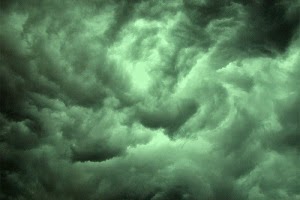
The Cloud Wall
Jack Kerouac's 'On The Road'. William Wharton's 'Birdy'. David Guterson's 'Snow Falling On Cedars'. Donna Tartt's 'The Goldfinch'. All of these, masterpieces that have taken me to places from which, on reading the final page, I've returned a slightly different person.
What do I mean by that?
In her blog post on 'The Sheila Variations', Sheila O'Malley states,
'One of the best parts of 'Winter's Tale' is that it gave me 'scenes' unlike anything I have ever seen in any book, in life, in theatre, movies. So specific, so fantastical, that they could only have come from the expansive imagination of one man...
I am forever grateful to Mark Helprin for showing me these things from his beautiful dreamscape, because now they are mine. Forever.
They are not nothing. Nothing goes away. Even things of the mind, the imagination, the dream, are important information to have as we try to navigate our way through the world.'
What do I mean by that? That's what I mean by that.
Of all the wonderful images the book brings alive, the one that intrigued me the most was that of the cloud wall - the mysterious, whirling barrier of cloud that surrounds the mythical New York City. Sheila O'Malley writes,
'Nobody knows what the cloud wall is. It sometimes picks up the sun, glinting with gold, and the wall reaches into the atmosphere. Sometimes it sweeps over New York City, and when that happens, chaos breaks loose. But for the most part, the cloud wall surrounds the city, a barricade, and people forget its existence. In the 20th Century section of the book, people have become so accustomed to the cloud wall that they don't 'believe' in it any more. Nobody even sees it. But maybe the cloud wall is a clue.'
But to what?
'...and although the whirling white cloud wall may not be mentioned for pages at a time, you always feel its smothering presence. You never stop wondering about it. What is it? And what might be out there, in the world, that is working on me, without me even realising it? Don't we all have a whirling cloud wall, to some degree?'
I lay in the bath one Saturday afternoon, deliciously exhausted after a long morning run, with the cloud wall in my head. And in that half-world between sleep and wakefulness, my own cloud wall became clear. The brooding, whirling barrier that surrounded my life was fear.
Although my wife, my children (and my running?) keep me sane, I'd fallen into a default life that I never wanted. I'd become immersed in the same old shit as everyone else. Working too hard in a job that bored me, manufacturing a product that I couldn't give a toss about, saying one thing but doing another, sacrificing precious time to earn money to spend on stuff we'd all be better off without.
In a moment of insight, I realised that the reason I was doing this was down to the cloud wall. In that instant, the cloud wall became a barrier for me between what is and what might be. A creeping fog of fear that is at once immensely comforting and cloyingly suffocating.
Surely I owed it, both to myself and the people around me, to walk into the cloud wall. To confront its challenges in the hope that things will work out, but with the knowledge that it might make things worse?
But how would I do this?
The steps I would take into the cloud barrier would have to be small at first. I couldn't afford to leave any of the people I love behind. And gradually, over weeks, months or years, I might see what lies beyond.
When you're a coward at heart, it's always easier to stick to the familiar first. (If you're an idiot too, then why not choose the very area of your life that might (or might not) be part of the problem you're trying to crack?) For much of the next few days, therefore, the cloud wall became inexplicably bound in my mind with running. It would be in the field of running that my bid to charge the cloud barrier would start. Get it right, and then - but only then - could I push deeper.
I came up with this idea of just running one weekend to destruction. Keeping going until I could no longer, mentally or physically, move forward any further. I'd mark out a 5 mile flat route from my front door and after starting off, just keep running, stopping only to eat or drink when I arrived back home. I googled the longest distance ever run continuously to give me a ball-park figure of how long I could possibly go.
The more I thought about it, however, the more this idea seemed dumb. I'd run 140-odd miles continuously in the past, but paid for it with months of injury and knackeredness. Maybe there was a difference between not doing something because you're scared to and not doing something because it's just bloody stupid. (But maybe not - I guess this dilemma also lies behind the everyday inertia most of us live our lives with.) Whatever - I knocked this idea on the head, confident that something better would turn up.
I've made a resolution in recent times to read less shit on the internet. To be fair, though, I do struggle. And although I'll continue to persevere in my mission to rid my days of modern technology, I have to admit that amongst the mass of sows' arses, you do sometimes come across a silk purse.
I chanced across a blog post by US ultra-runner, Dominic Grossman, entitled 'The Merits of the Full Blarney'. It was to change my life for the next three weeks. The start of Grossman's blog is great:
' I have to admit, I have a problem:
I can't take anyone's word for it; "it" being defined as any truth about life, running, work, relationships, etc. I have to empirically prove it to myself multiple times to thoroughly know the truth inside and out.
My training is an especially true testament to this; I can never accept truths that I haven't dramatically proven to myself. I have to put stress on my body in every possible way until I understand what's really going on. So, when I read that former pupils of Jim O'Brien had done blocks of ten 100 mile weeks, I had to try it for myself.'
Now, I'd come across Grossman before in my overexhuberant following of the US ultra scene, but I'd never heard of Jim O'Brien, his 80's disciples (Larry Gasson , Bruce Hoff - amongst others) and his fondness for prescribing a block of ten consecutive 100 mile weeks in his training programmes. A couple of hours later, however, I knew a fair bit about them all.
Jim O'Brien's athletic career was shaped by several standout performances, but defined by one unbelievable record that still stands as a benchmark to this day. His 17.35.48 Angeles Crest 100 record of 1989 has never been threatened since it was set. Remarkable in itself, what makes it even more special is that the course was almost two miles longer in those days than it is now.
O'Brien's preparation for this race was extreme.
'I really prepared for Angeles Crest in 1989. I sacrificed for six months before the race. I had meticulous planning; crew, pacers and nutrition, all dialled in. I had three plans. Plan 'C' was to run close to the record. Plan 'B' was to run conservatively and break the existing record. The secret plan 'A' was to go under 18 hours. The training began a year before the race. My mileage for the six peak weeks, nine weeks prior to race day, was 150 to 200 miles in a continuous build. I then tapered downward from 200-100-75-50 per week.'
Although O'Brien's athletic achievements are something else, there's scope to suggest that he left an even bigger impression in the world of coaching. Starting at the University of San Diego from 1982 to 1984, onto Cal Tech through to the mid '90's, and then at Arcadia High School till 2013 (whereby he was sacked as victim of an internal politics bullshit battle), O'Brien became one of the most successful and charismatic coaches in the US education system, credited with always getting the most out of his athletes.
It was during the '90's that O'Brien also took on coaching private clients. In time, this became 'Team Blarney' - a name synonymous with running achievement in Southern California. At Team Blarney, O'Brien coached a spectrum of runners from 10k speedsters to those wanting to run a trail 100 miler, and included runners from their late teens to mid 60's.
O'Brien's coaching philosophy was pretty simple. He pinpointed the biggest mistakes long-distance runners made:
'Not taking the distances seriously, not treating the training seriously, and being self-coached with no serious direction. Also, a blind willingness to replicate mistakes, and a resistance to positive ideas.'
Suffice to say, I probably wouldn't have made Team Blarney.
'In order to get the most out of your ability, you have to run at a higher level of seriousness. Why? To maximise your ability to finish the distance in the shortest possible time. The runner must be willing to train at a higher intensity, and to properly prepare for the rigours of the distance. This is unavoidable.
'Running 20 miles a week isn't going to cut it. Distance runs aren't enough either. Most ultra-runners run their training runs slower than their race pace. This isn't good. This is where speed work comes in. But speed work must be understood as an efficiency-building exercise. Nobody does speed work at 12-15 minute miles; it's too slow. Speed work is designed to reinforce efficient running habits.'
Bearing the above in mind, central to his athletes' preparation before a long race was the 'Full Blarney' - a ten-week block of consistent back-to-back 100 mile weeks wherein speed was focused on as much as distance run.
An example month block can be seen from the training diary pages of Bruce Hoff - one of O'Brien's most successful athletes.
I have to admit, I always feel a strange excitement at the prospect of running myself into the ground, and the discovery of the Full Blarney got me properly buzzing. Through this trial of miles, I would take my first steps into the cloud wall.
I've done big weeks in the past. Plenty of 100 mile weeks, the very occasional 200 mile week, but never 10 100+ mile weeks in a row. The reason? It scared me. It scared me in its prospect of the time commitment necessary and the mental discipline needed. It scared me because it was so removed from typical modern-day running coach advice (ask anyone - run 100 miles for 10 weeks and you're just asking for trouble - 'your body just won't cope!) and, moreover, it scared me because whenever I'd tried in the past to run back-to-back 100 mile weeks, my body hadn't coped. I'd succumbed to tiredness and injury, and reverted - retreated, tail between legs - back to my normal 'sweet spot' of 60 -70 miles.
The Full Blarney was taunting me. In a short time, it began to take on a symbolic significance that perhaps it shouldn't. Fine - a Blarney might set me up for this summer's race. Fine - a Blarney would determine if I was physically anywhere as near as good as I hoped I could be. But more, more than this, the Blarney began to mean something else. If I was to change my life in the way I desired in the future, if I was to tackle my fears of doing something radically different (not in my running, per se, but in the whole way I go about living) I needed, first, to finish this stupid challenge.
On June 28th - the day after my 47th birthday - I arrived back at the step at the end of a 13 mile evening run (and a 29 mile day). I was tired, but not done in. And my Full Blarney was complete.
For ten weeks, I'd averaged between 103 and 116 miles without missing a day (my streak, started on February 22nd, is still intact - 149 days and counting). It had been hard, but not impossible. Admittedly, I'd foregone O'Brien's emphasis on speed work - the only time I ever run fast in training is by accident - but I'd done my ten weeks nevertheless.
And what had the Blarney taught me? A few running-related things probably:
- as long as you're flexible, you can always find the time to run 100 miles in a typical week;
- sometimes, the runs where the first miles are the most frustratingly painful end up as the ones where the last miles are delightfully effortless;
- consistency hardens you. Run every day and niggles rarely become injuries. Refuse to rest and, after a day or two, they magically go away;
- it's possible to run 100 miles in the week after a gruelling 60 mile trail race;
- running a lot of miles makes it easier to run a lot of miles (I completed the afore-mentioned 60 mile race at the end of week 9 of my Blarney in a time 1 hour and 45 minutes quicker than last year.)
There's a few others, I guess, but rather than reading about them, it'll certainly be less boring - and infinitely more rewarding for you - if you go out and have a crack at a Blarney yourself.
These running-related things, however, mean bugger all in the grand scheme of things. The most important thing the Blarney taught me was that earlier throw-away sentence: It was hard, but not impossible.
It is this, over everything else, that I need to remember.
To break through the cloud wall, it will be hard, but not impossible.
David Cain writes so insightfully on the subject of fear - the very grey matter that makes up the cloud wall:
'When you decide you’ll walk into your moments of truth — your project launches, race days and blind dates — with an unconditional willingness to see what happens, fear doesn’t have much to do.
For some reason we interpret the presence of fear as a trustworthy reason to be tentative, to delay our arrival at a result. This gives fear time to make the unhappiest possibilities bigger in our minds, seemingly more worthy of respect. Yet fear is your mind at its dumbest and least articulate. All it knows how to do is shout “Get away!”
It designs endless disaster scenarios, not just of failure or setback but of complete ruin. It understands your options only in terms of how they could bring on your annihilation, and therefore is blind to everything else that your experiences can do for you: wisdom gained, doors opened, and particularly the possibility of success. It just doesn’t see it.
So it always bets on death and irreversible consequences without even reading the odds sheet. But like any idiot conspiracy theorist, when it guesses right its confidence explodes, and you can’t shut it up. (“See! They didn’t like your poem! How stupid that you tried!”)
When you point out any of the million instances in which fear was wrong, it changes the subject to its most recent victory, or it makes a brand new prediction. If you’re not thinking for yourself, you’ll start to parrot its paranoid convictions — “It doesn’t matter what I do, things never work out for me! Nobody can love me!” and other beliefs so asinine they would require a global conspiracy to be true. You might even find yourself actively looking for evidence to support fear’s claims, not for any logical reason, but because you wish you were as confident as it is.
And once you’re confident fear is usually right, you’ll be right so often that you’ll never want to bet against it. That’s the great irony of fear: give it too much respect and it becomes the paralysis and annihilation from which it ostensibly protects you.
We are smarter than fear. Walk into the thing it tells you to cower from — or “Feel the fear and do it anyway” as Susan Jeffers would say it — and fear dies, because you ignored its only wish, which is to keep you from going certain places to see what’s actually there.
Unless you have a rational expectation of grievous bodily harm or financial ruin, respond to fears with curiosity about what life actually looks like beyond the moment of truth. Pass through the door and see what’s there. You can take it. The sky has fallen a thousand times already.
Even if you do find what fear warned you about, you’ll notice it had none of the details right. It doesn’t look like, feel like or require of you what you thought. That’s because fear doesn’t know anything about the future. Fear only ever has old material to work with; it makes its predictions out of the past. It’s desperate to prevent you from getting to the future to see what’s really there, because then it will quickly lose your respect.'
As I've gotten older, I've matured a long way from the shy, introverted, lost kid that I once was. I'm more confident, have less inhibitions, take less notice of what others think or say. But, interestingly, when it comes to the way I live my day-to-day life, my fear has increased.
I'll give you just one example.
During the winter of 1989, I flew with my sister to Perth, Australia, to meet Our Kid who'd gone out to Oz six months previously. After bumming around on the fringes of the Pro Surf Tour in Margaret River for a few days, we returned to the northern suburbs of the city and slept in a car-park near Scarborough Beach for a while until we secured a cockroach-infested flat a couple of hundred yards from the Indian Ocean. Two or three dead-end jobs and a month's grape-picking later, with barely enough spare cash to finance a daily food spend of 10 dollars a day between the three of us, we drove across the Nullabor Plain to Port Augusta, before heading to Alice Springs and the remote heart of the continent. From there, we drove to North Queensland, sat out a tropical cyclone for a week and followed the coast south to arrive in Sydney two days before Our Kid's flight home, totally skint.
With zero knowledge of basic mechanics, it had been a concern when the van failed to start at a roadhouse a hundred miles or so short of Ayer's Rock. Fortunately, a drunken trucker, taking a shine to my sister's English accent and blue eyes, had showed us how to bang a starter motor back into life with a hammer, and we'd used that new found skill on more occasions than I care to remember for the rest of the trip. It seems strange to me nowadays, looking back, how strong our belief in everything turning out alright had been. Somehow, we always knew - or convinced our young selves that it was so - that wherever we were - middle of nowhere, holding up traffic after stalling at traffic lights on Sydney Harbour Bridge - we'd manage to get that old bus started again. And we always did. For that year, we acted first and feared later.
I'd not yet learnt to drive during those long-gone months of adventure. As the Kombi putt-putted into the Outback, I'd either be sleeping in the back or sprawled in the passenger seat reading 'Zen And The Art Of Motorcycle Maintenance' or 'The Fountainhead', listening to one of our collection of three cassettes we'd bought from Target before departure - The Sundays' 'Reading, Writing and Arithmetic', The Smiths' 'Louder Than Bombs' and James Taylor's 'Greatest Hits'.
When I arrived back in the UK in 1992, it took me a few more years to get round to taking my driving test. Spurred on by the memories of that Australia road-trip, I eventually passed in 1996 and bought my first vehicle - a split-screen yellow VW bus - for £1800 from a bloke in Boston. On its last legs since Day One, I drove that bus everyday for the next two years, knowing that I'd break down more often than just now and again, but not really giving a toss. Although the Sound Of Fire was never far away, in the area of just getting on with it, the cloud wall was almost non-existent. If it had been, I guess I would have never given up everything in 1998 and fucked off to Africa.
In recent weeks, it's a VW bus that has become the mascot of my own cloud wall - the benign symbol of everything that's wrong.
After my original bus rotted away, I chopped her in as part-payment on a 1967 Splitty - the same age as me. But when, after a lengthy restoration, I eventually drove her home, things had changed. My circumstances had changed. I had changed.
I was now thirtysomething. Married. Two small children. Mortgage. Most of the stuff I'd always wanted. Some of the stuff I'd never wanted but had got anyway. And without me noticing, the cloud wall had crept in, insidiously encroaching waves, surrounding my life, keeping me 'safe'.
The bus was a totem of how things had changed. For the last 8 years, this amazing piece of iconic styling and minimalist engineering has done less than 1000 kms each year - less than I'd do in a month in my old wagon. And when I sit back and ponder the reasons why, the answer is simple - fear. Fear that on a long journey, I'll break down (all that waiting around and inconvenience, you know, when I've things to do!) Fear that using this bus on a day-to-day basis will only encourage rust and cause so much wear and tear that its extortionate value will decrease (but what of it's real value? It's value to me, not it's nominal monetary value. Protectively cocooned, but hardly used, it's real value to me is a tiny fraction of what it could be.) Fear that if I leave it parked on the roadside, some knob will nick it or scratch the paintwork.
So, it sits in the garage, loved but hardly enjoyed, like an expensive ornament or a wedding dress. That's just not on.
I've been reading through old Bumfuzzle posts recently. Check out the site - they're cool folks. People like this have no cloud wall surrounding them. But it never just disappears of its own accord. Rather, by making brave and bold and life-changing decisions, by living more consciously, more mindfully, not just going through the motions, some folks are able to burst through the hazy barrier that encloses most of our lives and experience living for how it really should be.
I'll be the first to admit that my life's pretty good. I've people who love me, I've people I love, I can do many of the things I want to do. But, still, there's something limiting me. There's a direction in which I must travel if ever I'm to find whatever it is I'm looking for. It's the cloud wall that stops me.
I'm no fool. I know it's rarely true that the grass is greener on the other side. I know running away is not the answer. And I've no misconceptions that what lies on the other side is a life that's just -well- better. I know that.
In my imagination, beyond the cloud wall is light. A bright, bright light that, at the moment, is being obscured.
Break through the clouds - make the changes I need to make, travel in the direction I need to go, face the fears that prevent me from really living - and the light will come through, sunstreaming in glowing shafts through stormy clouds.
And maybe, just maybe, under this light, what I have here, right now, will be illuminated so brilliantly that I'll be staggered by its beauty.
Saturday, 7 June 2014
BeginningMiddleEnd
Beginning
It all started so promisingly, I seem to remember. The Art Of Empty Miling. But where did it all go wrong?
Middle
Take four scenes:
1. The phone rings. It's Sunday morning. I look at the clock on the little table by the bed. 7.50. Tam gets up and runs downstairs muttering something like, 'Who's this ringing at this time?'
I hear her voice as she talks on the landline, making her way back up to the bedroom. I gather it's Our Kid she's talking to. There's no other reason he'd call this early except to pass on bad news.
When Tam's finished talking, she lays the phone on the duvet and looks over at me. I'm waiting for it.
'It's your Mum, Chris. She's had a heart attack. They're taking her to Lincoln.'
Twenty minutes later, we're on our way out the house. We'll drop the superheroes off at Nanny and Grandad's, and get straight to the hospital. Tam double-takes as I come down the stairs clutching a tee-shirt, shorts and a pair of running shoes.
'What you doing?' she says.
'Just taking my running stuff,' I tell her. We could be there all day, I think. May as well take my gear. If there's no time while we're waiting, I could always get Tam to drop me off somewhere and I'll run home. Whatever, I could do with getting a run in sometime.
Tam rolls her eyes. 'You were out all bloody day yesterday, Chris,' she says, 'Your Mum's in hospital!'
As we're approaching Lincoln an hour later, a worst-case scenario passes through my head. It seems unreal, but it's a possibility. What if - just what if - we get to the hospital and we're ushered aside by a nurse with unthinkable news. I think back to the last time I saw my Dad alive. Kissing him goodbye - the first time I'd ever kissed him. Telling him I loved him - the first time I'd ever done that too. Driving home to the flat in Boston, Our Kid behind the wheel and the Sasha remix of M People's 'How Can I Love You More?' on the stereo.
I glance down at the running gear by my feet in the passenger footwell, and wonder how my priorities have gotten so skewed.
It turns out Mum's ok. A blockage in an artery caused a heart attack, but a stent's already been fitted. In a couple of days she'll be allowed to go home.
We leave the hospital mid-afternoon. Tam drops me off in Harrington and I run ten miles home.
2. It's lunchtime at the factory. I open the office door and plonk myself down on the swivel chair with an exaggerated sigh of desperation.
Tam's in no mood for giving sympathy today.
'What's up with you?' she says.
'I'm fucked,' I tell her.
In the course of three or four weeks, the workload at the factory has gone mad. The summer season is on us, a staff member's got a job round the corner, and I've moved from doing not a lot for 24 hours a week to full-on grafting for between 40 and 50 hours. On top of 100 mile running weeks, I'm totally spent.
'All that bloody running you're doing,' Tam says.
'All the working I'm doing,' I tell her.
'You need to get things in perspective,' she goes on, totally ignoring what I've said. 'You're your own worst enemy. I know you're training for this race, but you keep on adding other stuff on top. First it's that 'I'm going to run every day for a year.' Then it's that, 'I'm going to do a full Blarney'. 100 miles every week for 10 weeks? Bloody stupid. No wonder you're tired. You need to listen to your body.'
I make some weak attempt at arguing back, but really can't be arsed.
I eat my lunch in silence and go back to work well before the half-hour's up, just to get out of the way.
My mood's no better by the time I get home. After a few barbed exchanges, I get out the door for my second run of the day when I'd much rather be taking a nap on the sofa.
Surprisingly, after 3 or 4 miles, I've run the fatigue from my legs and I'm looking forward to the next hour before I arrive back. It's then that I think of the superheroes. Is this the first time I've ever come home and said not one word to them? So caught up in this running fiasco, it was as if I'd forgotten they were there. Then I remember it was Lightning's first day of school exams. I imagine how he would have been waiting for Dad to come home just to ask if he'd done ok. Instead all that mattered were myself and my miles.
I stop for a moment. Literally stand still for a few seconds. 'What am I becoming?' I think. I don't hang around for an answer, however. I still have another 7 miles to do.
3. It's more like an October morning than one in mid-May. The mizzle hangs low over the road ahead, the wind blowing the fine rain against the flimsy fabric of my running jacket, causing it to stick to the sodden tee-shirt underneath. I'm wet through. I'm cold. I'm tired. I'm half-way through a dawn 12 miler.
The unmistakable sound of an engine ahead automatically steers me to the edge of the narrow country lane. I look forward and see an orange sports car tearing towards me. For a second, I'm tempted. Take two steps to the left, Chris. Just stand still. And pretty soon your run will be over.
Back at the office sometime later, I'm eating my breakfast. A hot shower has restored my spirits. I can't help though but think of the morning's run. I put my thoughts down to the 'urge to jump'. I'd talked to Tammy about whilst we were on holiday at Christmas. I'd been unable to lean on the railings on a cliff-side walkway. It hadn't been a fear of heights that had freaked me out when glancing down at the hundred foot drop to the rocks and the crashing waves beneath, it was that little something inside my head that told me, 'Go on then - jump!' The same little something that made me uneasy on balconies, caused me to stand well away from the track at railway stations and tempted me to pull on the handbrake when driving in the fast lane of the motorway. I'd done some research on the phenomenon on my return home and found it was fairly common. It's origins are hazy, but it appears it's unrelated to a true desire to end it all.
But as I think of this morning's run, this knowledge is cold comfort. For the fact is, at the moment that car approached, I would have given anything for that run to end, rather than continue. How on earth has an activity I've loved for so long become so stale?
4. It's half-past 6 and the evening's getting away from me. It was nearly two hours ago when I'd made to get off from work and get my mid-week long run in. Just about the same time as a couple of old customers decided to drop by to stock up on some colouring boards for the forthcoming Bank Holiday. After half an hour of pleasantries, I'd left them to scour the shelves and put together an order for themselves whilst I slunk off to the office, my temperature rising, my core becoming more agitated. To hit 110 by the end of the week - my target for week 4 of The Blarney, I'd need to do at least 15 tonight. At this rate, I won't be home till 8. I hadn't even had time for tea. Hungry, wound-up, pissed-off, I sit in front of the computer and check my e-mails.
Nothing new, but a recent one entitled 'Game Changers' nudged at me. Since Christmas, Cainey, Our Kid and I had been on this 'game changer' kick. We'd take it in turns to nominate a person who we thought had really made an impact on their chosen field - had 'changed the game' - and the remaining two would, after some research either accept or reject the nomination. Any person receiving a majority vote made the list, that would grow as the year progressed.
I'd really enjoyed our little game, and through it had come across some staggeringly inspiring people. Cainey's last nomination, however, had left me cold. Jill Taylor Bolte. When I'd initially received his e-mail, a quick Wiki search had enabled me to suss that she was some sort of brain scientist. That was enough to totally put me off. I'd kept putting off any further research - just wasn't inspired - but now I figure it's a good time to get stuck in and at least use this time stuck at work to do something mildly productive.
An hour passes. I'm knocked for six.
A connection has been made. I now know what to do. I now know what's gone wrong. I now have a vision of how to put it right.
End
Jill Bolte Taylor is an American neuroscientist. She studies people's brains. Her TED talk, A Stroke Of Insight, is just over 18 minutes long, and with 15 million views is the 2nd most widely viewed TED talk of all-time. If you are at a loose end for just over 18 minutes sometime soon, may I suggest you take a look?
If you think, 'That's just not for me' (just like I did), or just can't be arsed, I'll cover the main points for you.
Jill Bolte Taylor starts with an examination of the human brain and the fact that it is clearly divided into two hemispheres. The right hemisphere works as a parallel processor, whilst the left works as a serial processor. Thus, the two hemispheres think about different things, care about different things. They process information differently, and therefore have different 'personalities'.
Taylor goes on to describe the two hemispheres. Hers is not the stilted language of a scientist, however. It is obvious she has been somewhere most of us haven't. (Her language reminds me of the feeling I had for three weeks recently whilst reading Mark Helprin's 'Winter's Tale'. The feeling I have when listening to The Waterboys' 'The Whole Of The Moon' - this feeling of the interconnectedness of everything - something that I can appreciate in theory, but, up till now, has escaped me in reality.)
On the right hemisphere:
' (This) thinks in pictures and it learns kinaesthetically through the movement of our bodies. Information in the form of energy streams in simultaneously through all of our sensory systems, and then explodes into this enormous collage of what the present moment looks like, what it smells like, tastes like, feels like and what it sounds like.
I am an energy being connected to all the energy around me by the consciousness of my right hemisphere. We are energy beings connected to one another through the consciousness of our right hemispheres as one human family. And - right here, right now - we are brothers and sisters on this planet, here to make the world a better place. And, in this moment, we are whole and we are beautiful.'
On the left hemisphere:
'(This) thinks linearly and methodically. It's all about the past and it's all about the future. The left hemisphere is designed to take that enormous collage of the present moment and start picking out details, details and more details about these details. It then categories and organises that information, associates it with everything in the past we've ever learned, and projects into the future all our possibilities.
The left hemisphere thinks in language. It's that ongoing brain chatter that connects me and my internal world to my external world. It's that little voice that says to me, 'Don't forget to pick up groceries on the way home.' It's that calculating intelligence that reminds me when I have to do my laundry. But, most importantly, it's that little voice that says to me, 'I am. I am.' And as soon as my left hemisphere says to me, 'I am,' I become separate. I become a single individual separate from the energy flow around me, and separate from you.'
On the morning of December 10th 1996, Jill Bolte Taylor, aged 37, suffered a massive stroke. Although she made a remarkable recovery over the course of the next 8 years, it was to change her perception and her life totally.
Conscious and calm throughout the initial stages, she, as a brain expert, figured out that her left hemisphere was shutting down. Rather than panic, she remembered thinking, 'How many brain scientists have the opportunity to study their own brain from the inside out?'
The events that followed form the emotional crux of her TED talk.
'As I lost my left hemisphere, I experienced a totally silent mind. I was captivated by the magnificence of the energy around me. Because I could no longer identify the boundaries of my body, I felt enormous and expansive. I felt at one with all the energy that was, and it was beautiful there. Imagine what it would be like to be disconnected from your brain chatter that connects you to the outside world. Imagine what it would be like to loose 37 years of emotional baggage. All my stress was gone, and I felt lighter in my own body. I felt a sense of peacefulness. I felt euphoria.'
Somehow managing to call an ambulance, she remembers curling up into a foetal ball and letting go, surrendering to the 'transition'. But it wasn't her time. On waking, she says:
'I could not identify the position of my body in space. I felt...like a genie just liberated from her bottle, and my spirit soared free, like a great whale gliding through a sea of silent euphoria.
And I thought, 'I'm still alive, and I have found Nirvana. And if I'm alive and I have found Nirvana, then anyone who's alive can find Nirvana. And I pictured a world filled with beautiful, peaceful, compassionate people who knew they could come to this space anytime, and that they could purposefully choose to step to the right of their left hemispheres and find this peace.
I realised what a tremendous gift - a stroke of insight - this could be for how we lived our lives, and it motivated me to recover.'
Her final words are the most important:
'We have the power to choose, moment by moment, who or what we want to be in the world - right here, right now. I can step into the consciousness of my right hemisphere, where we are, I am the life power of the universe. Or I can choose to step into the consciousness of the left hemisphere where I become a single individual, a solid - separate from the flow, separate from you.
These are the 'we' inside of me. Which would you choose? Which do you choose? And when?
I believe the more time we spend choosing to run the deep inner peace circuitry of the right hemisphere, the more peace we will project into the world, and the more peaceful our planet will be.
And I thought that this was an idea worth spreading.'
Jill Bolte Taylor's words had a devastating effect on me. To say that in the last two weeks, I've felt the stirrings of a spiritual awakening sounds clichéd and ridiculous. Nonetheless, it's true.
What I'm experiencing affects the whole of my life, of which running is just a facet. However, since this blog is a running one, or has been up to this point in time, it's my relationship with running that I shall consider first.
Having been right in the first place, my running in recent times has gravitated away from Empty Miling and towards the false concept that we now universally acknowledge as 'running'. Always up for self-experimentation, at the back end of last year, in a post entitled 'Acts Of Erosion', I outlined my intention to examine the fine distinction between running as work or play. Blown away by the legendary preparations of Kyle Skaggs and Pam Smith, I wanted to know what it must be like to spend months working towards one goal. I chose a race, and for the last few months I've been obsessively training with a single objective. Although I'm still a few weeks from the end of this trip, it's taught me many lessons, the most important of which is that I'll never do this again.
I don't break promises. I shall run my race, but after hearing Jill Bolte Taylor's words, never have I been so convinced of the power, and the truth, of my 'empty miles'.
By gearing my running around a future performance, my daily miles had moved from a valuable right hemisphere-based activity - the value of which was simply the here and now, the union between myself and my surroundings - to a left hemisphere-based act of drudgery, constantly accompanied by the internal commentary of what I should be doing for that all-important, up and coming race.
Think back to the four scenes I described earlier. That's just not fucking right. Is it?
In the two weeks since I watched that talk I've continued to run many miles, but my perception of them has changed. And - just like that - with a change in perception, my running has become enjoyable again.
After this race is done, my running will be unshackled by the constraints of 'performance' or future events. My miles will be entirely empty. None of them will be run with a goal in mind. My movement will be daily meditation.
Bullshit? You may think so. But ask yourself a question. When someone asks you, that next time, 'What are you running for?', rather than gushing out the same old, same old like, 'I'd like to break 3 hours for a marathon', 'I want to beat my 10k PB', or 'I'm after coming in the top 3 in my next ultra', wouldn't it be great - liberating - just to say, 'It just makes me happy.'
There's this feeling I keep writing about. It's been with me all my life. The Sound Of Fire. Keep On Burning. Call it what you will. This deep-seated restlessness that pushes me onto the next thing. (That pushes me onto the next thing - that future goal which is bound to make me happier, right? - but detracts me from fully experiencing what I'm doing right now.) I've spoken about it before in positive terms. This force that drives me to ask questions, to seek endlessly, seemingly confident in the fact that an end result at some point is bound to bring satisfaction. To bring contentment - a word I've previously scorned, but now know is my ultimate goal. Love is contentment. And contentment is Nirvana.
There's no escaping it. I hold my hands up. All along, I've been wrong.
I've wasted the precious moments of my life too caught up in the thoughts of the past and the hopes for the future. I need to kill Keep On Burning if I'm really to live. For Keep On Burning is just left-brain chatter, white noise drowning out constantly what is real. What is now.
I've never been truly happy. It's only now that I realise that this is not because my life doesn't contain all the ingredients for happiness, for it does. No, it's because, for any time longer than snatched fragments, I've never been able to silence that inner voice that's always pushing me on.
A future achievement would always make life better. That's what it said. And so I wasted my teenage years studying obsessively for the highest exam results. And so I wasted my 20's and 30's working the longest hours I could. And yet, once I'd arrived at the destination, things were always the same.
My return to running after a break of several years was with the best intentions. Empty Miles. Some time each day when I'd feel stillness, when that voice would go away. Until I fucked that up too, and the voice started guiding my running away from what I deep-down knew it should be into something more in line with this crazy society, warped out of shape by 'competition', where foregoing the present in favour of the future is drummed into us from nursery school.
I look at Tammy and the superheroes, and see their happiness. I've got the same things as them. Why can't I feel it in the same way?
The voice has been with me for as long as I remember. I guess it's a sad reflection of my priorities that only when it began to impinge on my enjoyment of running did I truly realise that it was time to make a change.
I knew something was wrong. In honesty, I've probably known for a long time. And it was Jill Bolte Taylor's words that finally- in an almost revelatory fashion - made me decide to do something about it.
That word - 'journey'. It's a word that makes me cringe when other people use it, but one that I use all the time. In this particular case, I can think of no other word to adequately describes what I now face.
With this public admission, I embark upon the most important and difficult trip of my life. A journey in search of the present moment. A step to the right. I have little idea of how to get there as yet, although that uncertainty is part of the indescribable pull. Google searches over the last couple of weeks have included: Eckhart Tolle, Buddhism, the Findhorn community, Russell Brand, Tommy Franklin, David Cain, Sri Chinmoy, transcendental meditation, soul surfing, slacklining, yoga and loads of other stuff that offer me just the merest of clues. The information I've gleaned has enabled me to take the initial steps I need to.
Phrases from unlikely sources have also pointed my direction of travel:
- Jeremy Vine stating on his Radio 2 show that should he ever address students about to embark on life after university, his advice would just be two words, 'Seize Love'.
- a caller to a 5 Live phone-in after the death of Stephen Sutton who outlined her 'meaning of life' as simply, 'Do as much good as you can. Have as much fun as you can.'
- the lyrics from Duke Dumont's new song, 'Ask me what I did with my life. I spent it with you.'
And running? I've a feeling that running - Empty Miling - might play an important role in the years to come. But I could be wrong. It will either fit or it won't. If it doesn't, it's something I'll gladly give away.
After all, for one journey to start, the previous one has to end.
Beginning
Monday, 5 May 2014
A Jog Around A Hill: The Kinder Killer
Whilst undeniably majestic, over the last couple of years, the Lake District appears to have been demoted to a distant second as my favourite away-day playground for long days in the hills. Instead, the Peak District has increasingly become my preferred location.
The distance of the drive to Cumbria from Saleby (anywhere between 4 and 5 hours) means a visit to the Lakes is only justifiable if the length of stay is a weekend or longer. The drive to the Peaks, however (2 - 2 1/2 hours), means it's still accessible as a hit-and-run one dayer.
I've come to know the Vale of Edale and its surrounding hills fairly well. Runs on the Pennine Way and recees of race routes such as the High Peak Marathon, the Edale Skyline and the Ultra-Tour of the Peak District have acquainted me with the true pleasures of the High Peak - an area very different in character to the Lakes, but equally rewarding in terms of challenging and satisfying long journeys on foot.
The village of Edale - the starting point for a good number of my days out - is overlooked on the southern side by the Great Ridge, an imposing geological slice that runs from Lose Hill, through Mam Tor and onto the furthest reaches of Rushup Edge. On the northern side, it is the equally impressive Kinder Scout that casts its shadow on this quaint Derbyshire village.
A vast and wild upland moorland plateau, Kinder Scout is a rare beast, by turns both exhilarating and terrifying, beautiful and impossibly bleak. Get lost in mist on that mighty plateau, I always imagine, and there's a chance you'll never be seen again.
The website www.peakdistrictinformation.com provides a good overview of what Kinder is all about:
Kinder Scout is a high windswept upland gritstone plateau, most of which stands at around 600 metres above sea level. The highest point is Crowden Head, which at 631 metres is also the highest point in the Peak District. This is the largest and grandest of the great upland areas of the so-called 'Dark Peak' and it forms an imposing and fascinating area.
The Kinder plateau rises steeply from the surrounding ground and the edges are studded with rocky outcrops and crags. At the western side the Kinder River flows straight off the edge of the plateau in a spectacular waterfall, Kinder Downfall, but this is just the largest of a whole series of crags. The northern edge of the plateau is a long series of rocks and there are several crags on the southern edge too. To the east the level of the plateau gradually lowers and tapers to a narrow neck of high land at Hope Cross which connects Kinder to Win Hill.
The edge of the plateau is scored by deep cloughs or river valleys - on the west side the Kinder River and William Clough lead down to Hayfield, on the north side the Ashop and Fairbrook streams and on the south side the various branches of the River Noe - Crowden Brook, Grindsbrook, Lady Booth Brook and Jaggers Clough.
Kinder is most popularly approached by walkers either from Edale village, up Grindsbrook, or via Jacob's Ladder and on to Kinder Low, or from Hayfield up William Clough and on to the north-west corner of the plateau. In general the eastern and northern parts of the plateau are less accessible and therefore less busy. A circuit of the whole plateau is a long day by any standards but a very enjoyable outing.'
During last summer, I grew increasingly fascinated by various long distance routes regularly attempted by the Peak area's fell runners, most noticeably those aligned with the Dark Peak mob. Challenges such as 'The 15 Trigs' and 'The 3 County Tops' checked onto my mental 'must have a go at sometime' list. However, two routes in particular really appealed to me. Devised by Ken Jones, 'The Kinder Dozen' and 'The Kinder Killer' were long distance journeys entirely based around this one hill. A relatively short, but impressively brutal route, The Kinder Dozen involves climbing and descending the Scout twelve times, each ascent and descent taking a different line to or from the top. At 33miles / 9000 feet, The Kinder Killer involves circling the Scout by ascending and descending the summit plateau seven times. Whilst I intend to both both routes in forthcoming weeks, it was The Kinder Killer that I decided to tackle first.
The route details of The Kinder Killer can be found here: http://forum.fellrunner.org.uk/showthread.php?1193-Kinder-Killer.
True to this year's spirit of just getting out and doing stuff on the spur of the moment and with just the most rudimentary necessary preparation, I'd decided a few days ago to give it a whirl on the forthcoming Saturday. A quick check on the weather promised a warm, sunny day with excellent visibility. We were on.
I'll not bore you with a blow-by-blow account of how it went, but I will tell you that I arrived in Edale just under 8 hours after setting out, feeling strong though suitably knackered, having enjoyed one of those days.
On the drive home, I couldn't help but think of a post on a walking forum I'd read the night before on the subject of The Kinder Killer:
'I know a couple of forum members that have had a go at walking it and given up, not so much from fatigue, but just through a building lack of enthusiasm to putting the energy into completing it.
It's (apparently) just a soul-destroying route, and not much fun as a walking challenge.'
Don't believe it for a second. With its breathtakingly beautiful lonely cloughs, a sketchy scramble from beneath the Downfall, stupendous views across the Vale of Edale, Ashop Moor and further afield to Glossop and Manchester, a wonderful traffic-free trot along the largely-ignored northern edge and a final gruelling, hands-on-knees climb to the summit of Grindsbrook Knoll, The Kinder Killer is the exact opposite of 'soul-destroying' and is heartily recommended.
Looking down on Edale at the start of the first climb.
A gorgeous day for active travel.
Take the path to the Druid's Stone.
Descend on faint trods to Lady Booth Brook.
Next up - the climb up Jaggers Clough.
Away from the crowds.
A fun scramble at the top.
Good running to Crookstone Hill.
Climbing Blackden Clough.
Summit plateau in sight.
Hidden treasures.
Fascinating geology.
The next destination,Fairbrook Naze, before the descent via Gate Side Clough.
Looking back at where I've been.
Criss-cross skies.
Ashop Moor from the northern edge.
Strange shapes.
Joining the Pennine Way near Mill Hill.
Down William Clough to the Kinder reservoir.
Following the River Kinder - climb number 5.
The Downfall in the distance.
How the hell do I get up there?
Moonscape near the Kinderlow trig.
Edale cross.
Jacob's Ladder from the 6th climb to the Woolpacks.
The last summit - Grindsbrook Knoll.
Edale awaits.
Friday, 11 April 2014
A Bit More Than Two Miles
It's Day 43, and if I can run today, I can run any day.
I've just got home. My biggest week ever. 260 miles and 36,000 feet over 7 days.
I'd been buoyed during the trip by how well my body had held out, but when I woke this morning to the hangover of another dream accomplished, it was apparent straight away that things weren't right.
My feet are fucked. The tendons joining the top of the foot to the lower leg are inflamed and sore. Any flexion, up or down, causes a grimace of pain. In addition, my right foot has swollen overnight to a grotesque charicature of its healthy self, whilst my calf and ankle have lost all definition, resembling now a semi-inflated balloon with the texture of play-doh.
Still, I've a promise to keep. And the promises you make to yourself are ones which should never be broken.
I slowly slide on my socks, grab the most cushioned shoes I own and lace them as loosely as I can without them slobbing off. Then I leave the house to start my run. Two miles. That's all I need to do.
By the time I reach the end of the lane, my impossibly awkward gait has regained some semblance of a running action. As I jog up the hill to the crossroads, I ponder - not for the first time this week - how much the human body can take when you give it no choice.
It's a beautiful afternoon - the day still blossoming with the promise that putting the clocks forward always seems to hand over at this time each year. On the way down to the footbridge, I'd usually soak up the splendour of the view before me, breathing in the subtle narcotic of well-being it can't help but provide. Today, however, my mind's elsewhere.
There's four or five of us waiting in a cramped room in the Old Gymnasium building on the Birmingham University campus. Eager 'A' level students looking to secure a place on the almost-prestigious Sports and Exercise Science degree course.
Nervous chit-chat, fake laughter and long silences.
After a while, a woman calls us through together to meet the interviewing panel. I can't help thinking it's an odd arrangement - in the trawl of University interviews so far, I've gotten used to facing the interviewers alone.
We sit on plastic chairs on one side of a long wooden table, whilst the panel face us from the other side. They seem your average University lecturer fare - middle-aged, in decent shape, slightly fusty. Except the old guy at the end. His dishevelled grey, balding, curly hair and his bushy beard give him the look of an eccentric, a weathered hermit, someone who just might be interesting. He wears a white cotton tee-shirt that could do with an iron, and a pair of blue Ron Hill tracksters.
We get asked the same old questions, and we supply the same old answers that the teachers back at school have taught us to provide. Just another interview. Then we're done.
But not quite.
After we've been informed that letters outlining conditional offers of entrance to the degree course would be posted in due time, there's one last question.
'So, what are you going to do this summer?'
There's silence amongst our group, everyone waiting for everyone else to speak first. Eventually, I take the plunge.
Knowing that 'I'm going to work on a caravan site for the summer holidays cleaning toilets and emptying bins' might not strike the right tone, I come out with a complete lie:
'I'd love to walk the Pennine Way.'
At this, the bearded guy's eyes light up. For the next five minutes, he asks me question after question. I reply as best as I can - it was a good job I'd watched that Yorkshire tele documentary over the half-term holidays about a group of youngsters walking the Way - and come out feeling like I've done a right good job.
It so happened that although my intention to walk the Pennine Way that forthcoming summer was a lie, my desire to do it was anything but. That TV programme had stirred something up. A journey like the one it portrayed was challenging, exciting, but - I was sure - totally beyond the reach of my 17-year old self . I'd no money, few organisational skills, zero knowledge of navigation and not a trace of mountaincraft. These issues would all have to be rectified first, but I felt sure that doing the Pennine Way would be something I'd get round to sometime. Probably sooner rather than later.
A few months into the University course, it became obvious why the bearded guy had been so interested in my Pennine Way intentions. For this man turned out to be Mike Cudahy. The now-legendary Mike Cudahy.
During the 80's, Cudahy took off-road ultra-distance running to heights never previously witnessed in the UK. Specialising in obscure routes over moor and mountain, Cudahy was part of the winning team in the first ever High Peak Marathon. He broke the record for the 120 mile route between England's two highest pubs - The Tan Hill Inn and The Cat and Fiddle, and knocked hours off the previous fastest recorded time for the 190 mile Wainwright's Coast to Coast route.
However, more than anything else, Mike Cudahy's life was dominated and defined by just one path. The Pennine Way was something that he couldn't leave alone. His quest to become the first person to complete the Pennine Way in under 3 days took nearly a decade and 8 attempts, but eventually came to fruition in 1984 with a mind-blowing run of 2 days, 21 hours, 54 minutes and 30 seconds. Although since bettered by Mike Hartley ( the only man to run the UK's 3 big Rounds back-to-back), Cudahy's effort remains one of the greatest ever runs in British long distance history. The book that tells its story - 'Wild Trails To Far Horizons' - is, perhaps, the most inspiring book about running that you'll ever read.
I return from a world of reminiscences and realise that my feet don't seem to hurt anymore. As I jog along the Wold Grift, the thought of why I'm in such a state at the present, though, can't fail to make me smile. After thirty years of not quite getting around to it, I've finally made good on my word. I've just run the Pennine Way.
The sun's low over the farm buildings to the west. The rape has yellowed over the week I've been away. The sky is thick with birdsong. There's nowhere else I'd rather be.
I've a blog to write about this, I acknowledge to myself as I move slowly, so slowly in the direction of the windmill, and snapshots of seven days on the PW start to move through my head on a mental slideshow:
- Debbie's smiling face at support stops and end-of-days. A sandwich, a pork pie, a hot coffee and a few words of encouragement;
- joking, piss-taking and the odd serious conversation with Dave and Chris A., two of the best running comrades a man could ever ask for;
- the highs and lows (literally) of Hoka and Adidas Contintental running shoes ('Hoka, Hoka!')
- the awe of experiencing the natural wonder that is High Cup Nick for the first time;
- the sun setting over Dufton on our way down from the high ground;
- slogs over Great Shunner Fell and Cross Fell;
- the amazing standard of the YHA bunkhouse accommodation;
- the joys of being lost in a forest at night;
- the moors, the bogs, the slippery slabs;
- a final, free, pint at Kirk Yeltholm's Border Hotel - the end of a long journey.
Before I know it my two miles are done. But I'm not.
These memories are treasure. I need to go on. Experience them, live them again, hold onto them for just a bit longer before I file them away.
I've a blog to write about this, I acknowledge to myself as I jog on. Or have I? Just as the native Red Indians believe that a photograph steals part of your soul, what if writing about my experiences, sharing them with strangers, takes away a little piece of each memory's magic?
Maybe I'll just keep them to myself.
Scenes from the last week keep appearing as I carry on. Part of me wants to run forever.
Today, I realise, perhaps I'll do a bit more than two miles.
* * * * * * *
Dave Swift and myself set off on our bid to complete the Pennine Way in a week from The Nag's Head in Edale at 9am on Saturday 29th March. We were superbly supported by Dave's partner, Debbie Sullivan, for the week and joined by Chris Armour (mountain Round superstar, comedian and stat obsessive) on the Tuesday, Thursday and Friday of the trip.
Our schedule was as follows:
Day 1: Edale - White House Inn (Blackstone Edge), 34 miles
Day 2: White House Inn - Malham, 42 miles
Day 3: Malham - Keld, 41 miles
Day 4: Keld - Dufton, 42 miles
Day 5: Dufton - Greenhead, 37 miles
Day 6: Greenhead - Byrness, 38 miles
Day 7: Byrness - Kirk Yeltholm, 26 miles
I extend my heartfelt thanks to both Dave and Debbie. Without either, fulfilling this particular ambition would have taken many more years. xx
Subscribe to:
Posts (Atom)