The news spread slowly, by word of mouth. Of course, we'd have all heard more quickly if we'd used The Apple Network, but all those transactions left a trace, and for all of the members of The Group, the consequences of such action were unimaginable.
No-one knew how many members The Group consisted of, or how it came into being. All that was certain was that The Group did exist.
The numbers were small and decreasing year on year, but while ever individuals retained a fierce, independent spirit and a need for transcendence - while ever individuals still wanted to live and not simply be sustained, The Group would survive.
The years since The Shift Of Power had been long and demanding. When News Corps had taken over the traditional means of government, we, the runners, had sensed dark days lay ahead, but we'd never envisaged the scenario we now encountered in our day-to-day struggle.
The rise of the Corporations had been inevitable. Now, all Consumers shared the same life-style. Since the mortgage system had collapsed and all property had been reclaimed, Consumers lived in a house owned by The Bank. They worked for one of the seven Corporations. Their earnings would be split in several ways. The majority of it would be deducted at source by The Bank. This would guarantee a roof over their heads.
News Corps would receive a share in return for providing Consumers with Entertainment and The Truth. (In the years since The Shift Of Power, the concept of the lie had disappeared. There were no longer any lies, only The Truth.)
Some of the credits earned through working for one of the seven Corporations would be spent on consuming products produced by the Corporations.
A small part of a Consumer's credits would be available for spending on Leisure. All Leisure took place in malls or gymnasiums, where access to Entertainment screens was available at all times.
It was in 2019, when the mountains were designated an Area of Forbidden Entry that rumours about The Group emerged. But it was the publication of The Adams Report, commissioned by TESCO, in 2020, that was the catalyst for the explosion of The Group's popularity. The findings of the report stated that 'the increased levels of naturally-produced chemicals inside the human brain, as a result of endurance running might have detrimental side-effects in terms of the propensity to consume.' Such findings, unacceptable as they were to News Corp and the seven Corporations led to immediate action. On October 21st 2020, running was declared illegal.
Members of The Group were encouraged to run alone and to stick to Out-Of-Bounds Wilderness Areas, where the numbers of Corporation detectives and News Corps hackers were more scarce. By such action, it was hoped, the possibilty of detention would be more remote. Increasingly, however, new methods of surveillance and Private Life Intrusion techniques had led to capture. And when detention centres were full, the Corporations had pioneered the practice of 'processing'. Through a combination of Electrical Cortex Stimulation and Positive Behavioral Therapy, an individual captured and detained as 'dangerous to society', or simply 'a runner' could be transformed into a model Consumer. A house would be provided by The Bank. A job would be provided by one of the seven Corporations. News Corps would enable said individual to experience the fullness of life through their provision of Entertainment and The Truth.
As members of The Group declined drastically through the 20's as a result of these measures, a mythical hero emerged. Cassady, it was said, had run over every peak in The Lakeland Zone. Having never missed a day's run in many years, he had somehow escaped detection. Stories grew about his feats in The North, most of them probably wildly exagerated, but inspiring nonetheless. In our darkest of days, here, at least, was a glimmer of light in an existence made unbearable.
But all lights go out. The news spread slowly by word of mouth. His detection, detention, processing.
And now I understand it will come to us all. I know that, but it makes little difference. For until my time is stolen from me, I will continue to greet the sunrise from impossible summits or the ocean's edge. I will continue to pay worship to the woodland tracks and forest trails. One foot in front of the other. A breath. A heartbeat.
And I'll rejoice in the shared secret - one that only we, the runners, truely understand.
Thursday, 7 July 2011
Saturday, 2 July 2011
That Feeling
1982 (14 years old)
Kid Jensen's smiling, surrounded by a group of starstruck young birds. Bubble perms and ra-ra's. 'Next up, it's Shalamar, A Night To Remember.'
History homework's on my lap. I put down my Parker pen, take a slurp of tea and rest the cup on the chair arm next to the empty bag of Nik-Naks. My mum looks at me disapprovingly and tuts.
The camera pans out and settles on the face of Jeffrey Daniel. His hair's in a classic wedge. He looks straight into the lens as if he's checking himself out in the mirror before a night out. One gloved hand pushes his fringe aside before straightening a white skinny tie.
I look over. Dennis and Alli are staring, saying nothing. Mum's disappeared into the kitchen.
On the screen, Jeffrey Daniel is imprisoned behind an invisible wall. He holds out his hands, presses them flat against the non-existent barrier and explores the surface to the right and the left, looking for a way out. Unable to escape, he hooks both hands over the top of the wall, pulls his upper body up and looks over.
I've never seen anyone dance like this. 'Mum, come and look at this,' Alli shouts from the lounge floor.
Jeffrey Daniel shakes his arms loose and bounces backwards towards a row of girls. One of them holds a jacket out. Without turning around, he slips both hands into the black bolero and smoothes it down. He bends his knees slightly, wraps two hands around a make-believe rope and heaves himself forwards across the studio floor.
Mum's in front of the tele now too.
Jeffrey Daniel jerks his body down into a disjointed limbo. When his back is touching the floor, he uses the invisible rope to pull himself up. But now he again finds himself trapped. His hands explore the walls of the invisible bubble, before he gives up and is tranformed into a human cyborg, every movement locked, robotic.
All of us are watching. Shalamar. A Night To Remember. The first time we'd ever seen body-popping.
The song moves to the instrumental break. Jeffrey Daniel turns sideways and puts up an imaginary umbrella. He forces himself forward into a raging wind, making little progress. And then a gust threatens to rip the umbrella from his grasp. It's blown behind him, his arm outstretched behind him too, holding on, and he's pulled backwards across the floor. His feet are stepping forwards but he's sliding backwards, walking the wrong way up a conveyor that just isn't there.
'Wooaa!' All of us say the same thing together. It's the most amazing thing I've ever seen.
And in that moment, everything's changed just a bit. From now on, things will be just slightly different.
I sit in silence, unaware of the tide of excitement that a dance move would have at school over the next few days. Unaware that a year later, having been taught the move by Jeffrey Daniel, Michael Jackson would perform it at the Motown 25 show and the press would christen it 'the moonwalk.'
But kind of aware - that feeling - that this would now always be a key event on the timeline of my own personal history.
1993 (26 years old)
Just back from our honeymoon in Egypt. Cracking tan, the hair's longer than it's been for a good while. I'm wearing my new Blundstones - black, round-toed, tailored black trousers and a white cotton shirt I bought in Luxor. I look ace.
I guess it's a case of my mates rallying round. All of the stuff that's happened in the weeks before and after my wedding day. Den and Dom will be round soon to pick me up. Literally and metaphysically. We'll meet Paul by the boating lake. He's got a new girlfriend, Emma. I've heard she's cool.
It had all started three weeks ago with the latest issue of Cosmopolitan. As I'd laid on the settee in that tiny flat above the caff, The Girl From Australia had threw me over the magazine, folded at the page she wanted me to look at. 'What are you, Chris?' she asked me.
I'd looked at the page. One of those crappy quizzes. 'ARE YOU HAPPY?' Pick an answer - A,B,C or D - for each of the questions and add them up at the end. Mostly A's - your life was great, you couldn't stop smiling. Mostly D's - your life was rubbish, may as well give up.
'What are you?' she asked again.
'I'm not doing this,' I told her, 'What a load of old bollocks.'
'No. I want you to do it,' she persisted and I notice there's tears in her eyes.
'I'll be C or D. You know me. My glass is always empty.'
'I know Chris. Even when it's nearly full.'
'It's not easy being a pessimist,' I told her, smiling.
'It's not easy being with one,' she replied.
I go back to watching the tele. I know I'm a miserable sod, but living with me can't be that bad.
'I'm not marrying you Chris. I'm not happy. I'm going home,' she said. She's crying. She left the front room and went upstairs.
I finish watching Top Of The Pops. She goes on sometimes, I think, give her ten minutes and she'll be back down apologising.
There's a buzz around Corkys. You'd be surprised at who's got caught up in the rave scene - the drugs have mellowed the Top Boys and football casuals into huggable mates who'd rather kiss you on the cheek than smash your face in. We stand around drinking Coke, checking out who's out, before handing over notes for little white pills from the big guy in the cap down the corridor near the toilets. The night's for the taking. This is it. If only I could forget her.
This is the hardest thing I've ever done, I think, as I finish the list. Everyone who was invited to the wedding knows now. Knows now that she's left me a week before the big day. But they don't know why. Neither do I for that matter.
We walk down Lumley Road and past the Clock Tower. We can already hear the music from the Festival Pavilion. The Promised Land. We're heading for The Promised Land.
I'd still thought I could change her mind. She'd moved out, rented a room in a mate's house round the back end of town. She'd invited me round for breakfast. A strange thing to do on the day that we were supposed to be getting married. Must have something to tell me, I'd thought, probably changing her mind. I'd walked round, dressed in my wedding suit, clutching a big bunch of flowers. That should do the trick, I'd thought, knock her off her feet. Make her want me again. But she'd laughed as she opened the door and we'd eaten breakfast in silence.
I love this feeling. The tingles. I look at the others and they're the same - swaying, moving with the music, coming up, becoming a part of it. And then a big tune drops and we're on the dance-floor, lost in it, feeling it, eyes closed, smiling.
I'd seen her for the last time the day before the honeymoon. I'd talked Dennis into coming to Egypt with me, I said, but a romantic Nile cruise with my twin brother wouldn't be the same as one with my wife. She'd laughed as I told her and handed me our photo-album.
'I don't want that,' I said, thinking of all those shots of us happy together. 'I'll keep on looking at them, making myself sad on purpose.' I'd gone to push it back over the kitchen table, but she'd stopped me.
'No you won't,' she said.
She'd hugged me before she left. I'd watched her go down to the caff's back yard from my spot at the top of the fire-escape stairs. 'See ya,' I called, not believing this was happening, seeing all this above, as if we were actors in a film. Just before she reached the back gate, I couldn't help myself. 'Hey!' I shouted. She'd turned round.
'What are we doing? What's going on? We love each other, right? Give me another chance. One chance. Go on. I'll change. I'll be whoever you want.'
That was what I should have said. But I didn't. I didn't say anything. I just stood there.
Eventually she goes, 'Chris? What?'
'Err.. when you going to bring my bike back?' Dumb words. The last words I ever said to her.
She'd shook her head and gone.
I stood, dazed for a while, and then went back inside. Sitting at the kitchen table, I reached for the photo-album. I pulled it towards me and opened it up. All the photographs of her, of us together, were gone. Four years gone in two short weeks. I closed my eyes and saw her. A crack appeared in the porcelain. I started to break.
Richard from The Aloof's on live percussion. He finishes his bongo solo and we're all going mad. A lull follows - the calm before the storm, a big tune on it's way. And the expectation, the whistles, the horns, the stamping of feet and the hands in the air. And when it comes, it kills us. Knocks us down while the piano riff smothers us. Chicago House. DJ International. Sterling Void and Paris Brightledge. 'It's All Right.'
'Generations will come and go.
But there's one thing for sure,'
A girl in front's wearing a t-shirt. A SMILE IS AN APHRODISIAC it says on it in 70's bubble writing. She looks at me and I smile, pointing to her shirt and then my face. She dances over, kisses me on the lips, and dances away.
'Music is our life's foundation,
And shall succeed all the nations to come,'
I look across at Dominic. He's smiling. He winks at me and points after the girl. We both laugh.
'And it's gonna be all right...'
I look across at Dennis. He's smiling. We salute each other.
'And it's gonna be all right...'
I look across at Paul. He's smiling. He puts his arms around Emma and pulls her close.
'And it's gonna be all right,
Cause the music plays forever on and on.'
And, in a moment - that feeling - I know it is. Hearing music on a timeless wavelength, never dissipating but giving me strength. The crack's disappeared. I'm unbreakable. And I know that a life fully lived is just a pile of good things and bad things. You can never have one without the other. And that's the way it should be, the way it has to be. But the bad ones won't break me. I'm unbreakable. It's gonna be all right.
2001 (34 years old)
It was a relief when I knew it was really happening. Thursday morning, 4 am. I'd been scheduled for a day teaching the Reception class. I loved teaching the older kids but those little ones did my head in. A baby on its way would be a good excuse to get out of it.
I'd laid in bed while Tam rang the hospital. It didn't happen like this on the tele. Come in straight away, the maternity nurse said, and be prepared for a long day. The Uno had started first time for a change, and a hour later, we'd been at the hospital.
Another adventure had begun. I viewed from the sidelines, back-rubbing and muttering encouragement. And just before noon a miracle happened. Where once we were two, now we were three. We became a family.
Sometime later, Tam follows the nurse down the corridor and I'm left alone with little man. I hold him nervously to my chest, his little eyes closed, his little head the most perculiar shape.
I'm overcome. That feeling. The same one I've felt just a few times before. My world's moved on its axis.
I can't stop looking at him. 'Hello Smasher,' I whisper, 'When you grow up, you'll be a superhero.' I know it's true. And when Tam arrives back and I hand him back to his mum, we look at each other for a long time, aware of the enormity of the moment, and I'm sure that she knows it too.
2011 (43 years old)
Over the previous three months, The Lindsey Loop had become my best friend, my favourite retreat from the everyday. I'd gotten to know her personality, her heartbeat. I'd fallen in love with her hidden valleys, her unique undulations through the Lincolnshire Wolds, her stiles, miles and byways. I'd sneaked away on spring evenings and visited her by myself, and on Sundays, I'd joined a gang from the Club and I'd showed her off, confident that everyone else would surely fall in love, just as I had. And they had.
Leon and myself had hatched the plan in February. We'd organise a club relay to cover the route of The Lindsey Loop, at 96 miles in length, the longest off-road footpath in Lincolnshire. It wouldn't be a day for bowing to the tyranny of Garmin or succumbing blindly to the god of The Training Schedule. It would be a day for moving from point A to point B on foot, a rediscovery of life's most simple pleasure. A day of running with Club members you didn't know too well, for having conversations and finding out that the guy you usually just say 'hiya' to is, in fact, one of the most inspiring people you're ever likely to meet. A day for enjoying the view, becoming lost in the moment. A day to appreciate the special magic of running.
The idea had been embraced with a passion that had taken me back. Everyone had wanted a part in this celebration. The excitement had become infectious.
The big day had edged nearer and nearer, and then was here, and now would soon be gone.
I'm stood by the cafe in Hubbards Hills, Louth. It's 7pm on a lovely June evening. As Club members arrive, meet up, chat and laugh together, I cast my mind back over a fantastic day.
Our midnight start in Market Rasen.
Running those first 20 miles through the darkness.
The carboot cafe.
The crazy photographs, the brilliant company.
Following the relay as it wound its convoluted path through medieval sites and busy market towns.
The enthusiasm.
The laughter.
The atmosphere generated by the finest little running club I've known.
Ninety-five of the most enjoyable miles of my life.
And now, just one to go. A group of about 50 runners - all ages, all abilities, united in identity - have gathered together. We'll run the last mile into Louth town centre. It'll be a moment to treasure.
The gang gets going and I stick to the back. Our little girl settles into a jog beside her school friend. I look at her - Whirlwind - our second superhero. She's talking as usual, telling her mate that it doesn't matter if they're not at the front, it's the taking part that counts. She makes me laugh - that wise head on innocent shoulders. Lightning's up at the front. It's a lifetime away since I held him for the first time - won't even let me kiss him at bedtime now.
Soon, we're into the park and the snake of runners spreads out. The running's easy and the air is still. Tammy runs past, glances across, says something that I don't catch. But I hang back.
And that feeling returns. It's taken a lifetime of running to be here today. It's taken a lifetime of living to become who I am.
My family. My friends. And the one passion that has always stayed with me. One foot in front of the other, a breath and a heartbeat.
I think back to those defining moments of my life. Those times when things changed. That feeling. The feeling that's with me now. Jeffrey Daniel on Top Of The Pops, that night at The Promised Land, the birth of our little smasher.
And I look forward to tomorrow. To waking in the morning and knowing that things have changed again, just slightly.
Thankyous
www.youtube.co.uk/watch?v=END_WYdf8pw
www.youtube.co.uk/watch?v=fxodGkgnIa8
Kid Jensen's smiling, surrounded by a group of starstruck young birds. Bubble perms and ra-ra's. 'Next up, it's Shalamar, A Night To Remember.'
History homework's on my lap. I put down my Parker pen, take a slurp of tea and rest the cup on the chair arm next to the empty bag of Nik-Naks. My mum looks at me disapprovingly and tuts.
The camera pans out and settles on the face of Jeffrey Daniel. His hair's in a classic wedge. He looks straight into the lens as if he's checking himself out in the mirror before a night out. One gloved hand pushes his fringe aside before straightening a white skinny tie.
I look over. Dennis and Alli are staring, saying nothing. Mum's disappeared into the kitchen.
On the screen, Jeffrey Daniel is imprisoned behind an invisible wall. He holds out his hands, presses them flat against the non-existent barrier and explores the surface to the right and the left, looking for a way out. Unable to escape, he hooks both hands over the top of the wall, pulls his upper body up and looks over.
I've never seen anyone dance like this. 'Mum, come and look at this,' Alli shouts from the lounge floor.
Jeffrey Daniel shakes his arms loose and bounces backwards towards a row of girls. One of them holds a jacket out. Without turning around, he slips both hands into the black bolero and smoothes it down. He bends his knees slightly, wraps two hands around a make-believe rope and heaves himself forwards across the studio floor.
Mum's in front of the tele now too.
Jeffrey Daniel jerks his body down into a disjointed limbo. When his back is touching the floor, he uses the invisible rope to pull himself up. But now he again finds himself trapped. His hands explore the walls of the invisible bubble, before he gives up and is tranformed into a human cyborg, every movement locked, robotic.
All of us are watching. Shalamar. A Night To Remember. The first time we'd ever seen body-popping.
The song moves to the instrumental break. Jeffrey Daniel turns sideways and puts up an imaginary umbrella. He forces himself forward into a raging wind, making little progress. And then a gust threatens to rip the umbrella from his grasp. It's blown behind him, his arm outstretched behind him too, holding on, and he's pulled backwards across the floor. His feet are stepping forwards but he's sliding backwards, walking the wrong way up a conveyor that just isn't there.
'Wooaa!' All of us say the same thing together. It's the most amazing thing I've ever seen.
And in that moment, everything's changed just a bit. From now on, things will be just slightly different.
I sit in silence, unaware of the tide of excitement that a dance move would have at school over the next few days. Unaware that a year later, having been taught the move by Jeffrey Daniel, Michael Jackson would perform it at the Motown 25 show and the press would christen it 'the moonwalk.'
But kind of aware - that feeling - that this would now always be a key event on the timeline of my own personal history.
1993 (26 years old)
Just back from our honeymoon in Egypt. Cracking tan, the hair's longer than it's been for a good while. I'm wearing my new Blundstones - black, round-toed, tailored black trousers and a white cotton shirt I bought in Luxor. I look ace.
I guess it's a case of my mates rallying round. All of the stuff that's happened in the weeks before and after my wedding day. Den and Dom will be round soon to pick me up. Literally and metaphysically. We'll meet Paul by the boating lake. He's got a new girlfriend, Emma. I've heard she's cool.
It had all started three weeks ago with the latest issue of Cosmopolitan. As I'd laid on the settee in that tiny flat above the caff, The Girl From Australia had threw me over the magazine, folded at the page she wanted me to look at. 'What are you, Chris?' she asked me.
I'd looked at the page. One of those crappy quizzes. 'ARE YOU HAPPY?' Pick an answer - A,B,C or D - for each of the questions and add them up at the end. Mostly A's - your life was great, you couldn't stop smiling. Mostly D's - your life was rubbish, may as well give up.
'What are you?' she asked again.
'I'm not doing this,' I told her, 'What a load of old bollocks.'
'No. I want you to do it,' she persisted and I notice there's tears in her eyes.
'I'll be C or D. You know me. My glass is always empty.'
'I know Chris. Even when it's nearly full.'
'It's not easy being a pessimist,' I told her, smiling.
'It's not easy being with one,' she replied.
I go back to watching the tele. I know I'm a miserable sod, but living with me can't be that bad.
'I'm not marrying you Chris. I'm not happy. I'm going home,' she said. She's crying. She left the front room and went upstairs.
I finish watching Top Of The Pops. She goes on sometimes, I think, give her ten minutes and she'll be back down apologising.
There's a buzz around Corkys. You'd be surprised at who's got caught up in the rave scene - the drugs have mellowed the Top Boys and football casuals into huggable mates who'd rather kiss you on the cheek than smash your face in. We stand around drinking Coke, checking out who's out, before handing over notes for little white pills from the big guy in the cap down the corridor near the toilets. The night's for the taking. This is it. If only I could forget her.
This is the hardest thing I've ever done, I think, as I finish the list. Everyone who was invited to the wedding knows now. Knows now that she's left me a week before the big day. But they don't know why. Neither do I for that matter.
We walk down Lumley Road and past the Clock Tower. We can already hear the music from the Festival Pavilion. The Promised Land. We're heading for The Promised Land.
I'd still thought I could change her mind. She'd moved out, rented a room in a mate's house round the back end of town. She'd invited me round for breakfast. A strange thing to do on the day that we were supposed to be getting married. Must have something to tell me, I'd thought, probably changing her mind. I'd walked round, dressed in my wedding suit, clutching a big bunch of flowers. That should do the trick, I'd thought, knock her off her feet. Make her want me again. But she'd laughed as she opened the door and we'd eaten breakfast in silence.
I love this feeling. The tingles. I look at the others and they're the same - swaying, moving with the music, coming up, becoming a part of it. And then a big tune drops and we're on the dance-floor, lost in it, feeling it, eyes closed, smiling.
I'd seen her for the last time the day before the honeymoon. I'd talked Dennis into coming to Egypt with me, I said, but a romantic Nile cruise with my twin brother wouldn't be the same as one with my wife. She'd laughed as I told her and handed me our photo-album.
'I don't want that,' I said, thinking of all those shots of us happy together. 'I'll keep on looking at them, making myself sad on purpose.' I'd gone to push it back over the kitchen table, but she'd stopped me.
'No you won't,' she said.
She'd hugged me before she left. I'd watched her go down to the caff's back yard from my spot at the top of the fire-escape stairs. 'See ya,' I called, not believing this was happening, seeing all this above, as if we were actors in a film. Just before she reached the back gate, I couldn't help myself. 'Hey!' I shouted. She'd turned round.
'What are we doing? What's going on? We love each other, right? Give me another chance. One chance. Go on. I'll change. I'll be whoever you want.'
That was what I should have said. But I didn't. I didn't say anything. I just stood there.
Eventually she goes, 'Chris? What?'
'Err.. when you going to bring my bike back?' Dumb words. The last words I ever said to her.
She'd shook her head and gone.
I stood, dazed for a while, and then went back inside. Sitting at the kitchen table, I reached for the photo-album. I pulled it towards me and opened it up. All the photographs of her, of us together, were gone. Four years gone in two short weeks. I closed my eyes and saw her. A crack appeared in the porcelain. I started to break.
Richard from The Aloof's on live percussion. He finishes his bongo solo and we're all going mad. A lull follows - the calm before the storm, a big tune on it's way. And the expectation, the whistles, the horns, the stamping of feet and the hands in the air. And when it comes, it kills us. Knocks us down while the piano riff smothers us. Chicago House. DJ International. Sterling Void and Paris Brightledge. 'It's All Right.'
'Generations will come and go.
But there's one thing for sure,'
A girl in front's wearing a t-shirt. A SMILE IS AN APHRODISIAC it says on it in 70's bubble writing. She looks at me and I smile, pointing to her shirt and then my face. She dances over, kisses me on the lips, and dances away.
'Music is our life's foundation,
And shall succeed all the nations to come,'
I look across at Dominic. He's smiling. He winks at me and points after the girl. We both laugh.
'And it's gonna be all right...'
I look across at Dennis. He's smiling. We salute each other.
'And it's gonna be all right...'
I look across at Paul. He's smiling. He puts his arms around Emma and pulls her close.
'And it's gonna be all right,
Cause the music plays forever on and on.'
And, in a moment - that feeling - I know it is. Hearing music on a timeless wavelength, never dissipating but giving me strength. The crack's disappeared. I'm unbreakable. And I know that a life fully lived is just a pile of good things and bad things. You can never have one without the other. And that's the way it should be, the way it has to be. But the bad ones won't break me. I'm unbreakable. It's gonna be all right.
2001 (34 years old)
It was a relief when I knew it was really happening. Thursday morning, 4 am. I'd been scheduled for a day teaching the Reception class. I loved teaching the older kids but those little ones did my head in. A baby on its way would be a good excuse to get out of it.
I'd laid in bed while Tam rang the hospital. It didn't happen like this on the tele. Come in straight away, the maternity nurse said, and be prepared for a long day. The Uno had started first time for a change, and a hour later, we'd been at the hospital.
Another adventure had begun. I viewed from the sidelines, back-rubbing and muttering encouragement. And just before noon a miracle happened. Where once we were two, now we were three. We became a family.
Sometime later, Tam follows the nurse down the corridor and I'm left alone with little man. I hold him nervously to my chest, his little eyes closed, his little head the most perculiar shape.
I'm overcome. That feeling. The same one I've felt just a few times before. My world's moved on its axis.
I can't stop looking at him. 'Hello Smasher,' I whisper, 'When you grow up, you'll be a superhero.' I know it's true. And when Tam arrives back and I hand him back to his mum, we look at each other for a long time, aware of the enormity of the moment, and I'm sure that she knows it too.
2011 (43 years old)
Over the previous three months, The Lindsey Loop had become my best friend, my favourite retreat from the everyday. I'd gotten to know her personality, her heartbeat. I'd fallen in love with her hidden valleys, her unique undulations through the Lincolnshire Wolds, her stiles, miles and byways. I'd sneaked away on spring evenings and visited her by myself, and on Sundays, I'd joined a gang from the Club and I'd showed her off, confident that everyone else would surely fall in love, just as I had. And they had.
Leon and myself had hatched the plan in February. We'd organise a club relay to cover the route of The Lindsey Loop, at 96 miles in length, the longest off-road footpath in Lincolnshire. It wouldn't be a day for bowing to the tyranny of Garmin or succumbing blindly to the god of The Training Schedule. It would be a day for moving from point A to point B on foot, a rediscovery of life's most simple pleasure. A day of running with Club members you didn't know too well, for having conversations and finding out that the guy you usually just say 'hiya' to is, in fact, one of the most inspiring people you're ever likely to meet. A day for enjoying the view, becoming lost in the moment. A day to appreciate the special magic of running.
The idea had been embraced with a passion that had taken me back. Everyone had wanted a part in this celebration. The excitement had become infectious.
The big day had edged nearer and nearer, and then was here, and now would soon be gone.
I'm stood by the cafe in Hubbards Hills, Louth. It's 7pm on a lovely June evening. As Club members arrive, meet up, chat and laugh together, I cast my mind back over a fantastic day.
Our midnight start in Market Rasen.
Running those first 20 miles through the darkness.
The carboot cafe.
The crazy photographs, the brilliant company.
Following the relay as it wound its convoluted path through medieval sites and busy market towns.
The enthusiasm.
The laughter.
The atmosphere generated by the finest little running club I've known.
Ninety-five of the most enjoyable miles of my life.
And now, just one to go. A group of about 50 runners - all ages, all abilities, united in identity - have gathered together. We'll run the last mile into Louth town centre. It'll be a moment to treasure.
The gang gets going and I stick to the back. Our little girl settles into a jog beside her school friend. I look at her - Whirlwind - our second superhero. She's talking as usual, telling her mate that it doesn't matter if they're not at the front, it's the taking part that counts. She makes me laugh - that wise head on innocent shoulders. Lightning's up at the front. It's a lifetime away since I held him for the first time - won't even let me kiss him at bedtime now.
Soon, we're into the park and the snake of runners spreads out. The running's easy and the air is still. Tammy runs past, glances across, says something that I don't catch. But I hang back.
And that feeling returns. It's taken a lifetime of running to be here today. It's taken a lifetime of living to become who I am.
My family. My friends. And the one passion that has always stayed with me. One foot in front of the other, a breath and a heartbeat.
I think back to those defining moments of my life. Those times when things changed. That feeling. The feeling that's with me now. Jeffrey Daniel on Top Of The Pops, that night at The Promised Land, the birth of our little smasher.
And I look forward to tomorrow. To waking in the morning and knowing that things have changed again, just slightly.
Thankyous
www.youtube.co.uk/watch?v=END_WYdf8pw
www.youtube.co.uk/watch?v=fxodGkgnIa8
Saturday, 21 May 2011
A Jog Along The Track: Cape to Cape, Western Australia (December 2010)
Sat in the back room, I heard the car pull up on the drive. Tammy and the kids. I took another look at the article in front of me - 'Cape to Cape Track of Western Australia' - before the front door opened and the two superheroes charged in. Take a deep breath now. This was going to be difficult but I was sure that I could manage it. Hearing Tammy struggling in with the shopping, I got up from the settee and shuffled tentatively into the kitchen.
We'd been planning our trip to Australia for over a year. The last time over there the two of us barely knew each other. All our time had belonged to us, children hadn't been talked about yet. We'd spent three glorious weeks together in the south-west corner of Western Australia, lazing on beaches, taking the occasional trip and just being together. When I proposed to Tammy at the Busselton Drive-In Movies towards the end of the stay, I knew that things would change. Our lives would become more complicated. An adventure had started.
Eleven years on, we were heading back. This time as a family - our first foreign trip together. We'd spend three weeks camping in Western Australia and a week with relatives in Adelaide. After several years' hard work building up a business, this month away over Christmas would be a god-send. It'd give us time to relax, to spend every day in each other's company and to reconnect with the things that i knew, deep down, were the most important in life, but which, oftentimes, got pushed aside in the hectic chaos of our day-to-day routine.
Tammy knew me inside out - that I'd be looking at foreign soil with an eye for a new adventure. 'Don't go getting any crazy schemes in your head, you,' she'd reminded me on countless occasions, 'this holiday is about us spending time together, not you going off on some mad trip for days on end.' For once, I'd agreed with her. I could get up early each day - when you're camping it's easy - and get in a decent run every morning. That'd keep me ticking over. And I was happy with this thought. Until I read the article, that is.
I'd finished work early on a Friday in August and enjoyed a run home. Once there, I knew I'd have the house to myself for a couple of hours while the kids did their swimming lessons and the missus did the shopping. I ran a hot bath, made a mug of sweet tea and grabbed the copy of The Strider that had been poking out of the mail box on my way in. Produced by The Long Distance Walkers Association once every quarter, it was mailed free to members and never falied to include articles about people hiking inspiring routes all over the globe. It's A5 size and slightly old-fashioned black and white lay-out always reminded me of the copies of Athletics Weekly I used to pore over as a kid, and had immediately endeared me to it.
As I lay in the bath, exhausted from another week of early starts, long hours and just enough empty miles, I flicked through this latest copy and came across a piece written by Andy Taylor. It started,
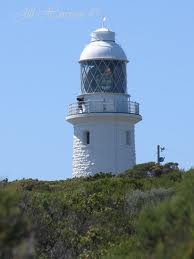
'For anyone looking for an excuse to visit Perth, Australia, The Cape to Cape Track must be the perfect reason. Stretching for 135km / 85 miles between the lighthouses of Cape Naturaliste and Cape Leeuwin in the far south-west of Western Australia, it features spectacular coastal and forest scenery and wonderful wildlife and fauna.'
Against all my best intentions, The Kid started whispering to me. Keep On Burning. Before reading any further, I knew it was something I had to do.
Whilst living in Perth for two years in my younger days, I'd fallen in love with Australia's south-west. Its beaches were amongst the finest in the world, its scenery was jaw-droppingly beautiful and its towns - Busselton, Margaret River, Walpole and Denmark - were places I could envisage spending the rest of my days.
I cut short my post-run soak, grabbed a towel and got online to check out more information on the Track. Before long, I headed to one of my favourite sites- Australian Geographic - and searched for 'Cape to Cape'. A piece by James McCormack appeared on-screen, and it's introductory paragraph merely confirmed what I already knew - this was one adventure I couldn't afford not to have:
'The 135km track is a succession of beautiful spots, spectacular headlands, high clifftops, tall karri forests and long, lonely beaches. The track runs along Australia's most south-westerly coastline, delivering fishermen to their tried and tested sites, surfers to challenging and world-famous waves, cavers to exquisite formations and climbers to spectacular granite sea cliffs. And, of course, there are those who come simply to walk the wild stretch of coast - to trace empty beaches, wend through wind-pruned heath and stand on high, watching rocks being pummelled by swells that have surged unhindered all the way from Africa.'
Running the Track would be an amazing experience. No doubt it would be hard work, but that was part of the attraction. The trickiest part, however, would be convincing Tammy that although this was another of my 'crazy schemes', the two or three days I'd need in order to do it wouldn't really get in the way of our holiday. That was going to be difficult, but I was sure that I could manage it.
Sat in the back room, I heard the car pull up on the drive. The front door opened and the two superheroes charged in. It's now or never. Take a deep breath now.
* * * * * * * * * * * * *
Months later, I'm stood at the start of The Cape to Cape Track. It's 5.45 am on a clear day in the middle of December. We'd flew into Australia a couple of days previously and driven down to Dunsborough, the nearest town to the Cape Naturaliste lighthouse. Camping overnight, I'd got up at first light and Tammy had given me a lift over the 12 kms from the camp site to the Track's start point in the car we'd hired. The kids had piled in the back, still in their pyjamas, and swiftly fallen asleep again.
As I strap on my day-pack, I'm a little nervous. Last minute preparations have been a bit haphazard. My only means of navigation are two basic Cape to Cape tourist maps. Although I'd been assured that the Dunsborough Information Centre stocked OS maps of the route as well as the official detailed guide book, both had been 'sold out' when I'd popped in the previous day. Running with a rudimentary map would have been no problem as long as I knew I could keep in contact with Tammy should I get lost, fall ill, receive a snake bite or become seriously dehydrated. Herein lay the next problem. Although I'd planned to buy a cheap phone in Perth with an Australian SIM card, I'd just ran out of time. Hence, from the moment I left Tammy and the kids, I'd be 'out of contact'. I'd have no means to contact Tammy and Tammy would have no way of phoning me. This was by no means ideal. I'd worked out a rough time of arrival at today's finish point - Gracetown, 46 kms away - and added a couple of hours. If I failed to arrive 3 hours outside that generous prediction, I told Tam, you best ring the local police. She'd replied with a look that made me shiver.
Making last minute adjustments to my shoes and straps, another problem springs to mind. In my over-concern to carry enough water for the day (water sources are extremely scarce on the Track), I'd forgotten to pack sun cream and a hat - both were still in the tent. With temperatures of 38 degrees forecast, this could make for an interesting day.
So, things aren't perfect but they'll do, I think. I say my goodbyes, sign the register at the Track's Northern Terminus, and get off.
The Cape to Cape Track's first 5 kms are easy going. An undulating tarmac path winds down from the lighthouse in the direction of Sand Patches beach. Although I admire the 'Access For More' scheme that has funded this short stretch to enable the disabled to sample the Track, I'm soon longing to leave the tarmac and hit the more typically rugged 'goat tracks' the Cape to Cape is based on.
Soon enough, the 'improved' path ends and I'm running on a sandy single-track trod through scrubby dune vegetation. The day's already hot. The surf pounds the rocks below. The sky is impossibly blue, the beach impossibly white. I think back to a few days previously when I trudged through ankle-deep snow across the Saleby fields, headtorch pinpointing my early-evening route and the coldest temperatures I can ever remember in the UK stinging my cheeks. It seems so long ago now that I'm half the world away.
At Sand Patches car park, a sign details track maintenance work and diverts me slightly inland. I'm reminded of the literature I read about The Friends of the Cape to Cape Track in the Information Centre the day before. The Leeuwin-Naturaliste National Park recreation planner, Neil Taylor, a keen caver who often used the rough coastal path, had originally conceived the grand plan of the Track in the early 90's, and although construction had started by the late 90's, money to continue the project soon became non-existent. The Friends of the Cape to Cape Track, now numbering 400, blossomed into being, each with a common passion for carrying the idea of the Track through. As a result of their sheer hard work, The Cape to Cape Track officially opened in 2001. It was a genuine and fantastic example of people power. Nowadays, sections of the Track are 'adopted' by Friends. Anywhere between once a year and every couple of months, these people will head out to prune, check guideposts, collect rubbish and do minor maintenance.
A rough 4WD access road climbs from the car park and, as I pull my map from my short's waistband to check the alternative route, I'm startled by a movement in the scrub. I'd heard carpet snakes and lizards were common along the Track, and I stop dead. Yards ahead of me, a kangaroo bounds onto the road and eyes me with intrigue. As quickly and silently as possible, I slip off my sack and rummage for my camera, desperate to get a picture to show the kids. I barely manage to take the photo before he's off - two bounds across the road and into the bush beyond.
I regain the Track at Sugarloaf Rock and continue across the tops of the limestone cliffs that stretch as far as Kabbijgup Beach. It's perfect trail running terrain - single track, interesting, but not too technical. The views to the west are spellbinding. At Kabbijgup, the Track drops to the sea for the first beach stretch. The soft sand makes for hard going. The holes in my favourite battered fell shoes suck in sand and make it difficult to run. As I leave the beach for the cliff-side path, I sit a while, empty the sand from my shoes and watch a group of surfers ride the three breaks - Baby, Momma and Poppa Bear - that give this spot its famous nickname, The Three Bears.
During the early stages of a long run, my mind races over all sorts of subjects. Gradually, as the miles add up and fatigue sets in, my thinking will become more focused. As exhaustion approaches much later, my only thoughts will be on my body - stay relaxed, stay strong, take another step. As I leave The Three Bears, I'm still feeling fresh. I ponder over this perfect way to end my running year - an important year defined by two runs in particular.
The first had been my Bob Graham Round in June. I'd set that as my main focus for the year and had based all my running for over six months on that singular challenge. My success had brought deep satisfaction, and the knowledge and friends acquired during my training and the round itself had opened up a new world to me. It had confirmed the direction I wanted to take my running in the future. It had turned my empty miles into ones of unbridled enjoyment and promise I'd dared not dream of.
The second had taken place just the day before. After setting up the tent around noon, we'd driven into Dunsborough to find some lunch and ended up spending the afternoon swimming and lounging around on the beach. Itching for an easy run, I'd sidled back to the car later on to dig out my running clobber. A steady 5 mile trot along the beach would set me up perfectly for the next couple of days' exertions. Just as I slipped on my shoes, Little Man jogged over. 'Can I come Dad?' he said.
He'd been really enjoying the junior sessions at the Club over the last few months and had done well in local schools races, but there was no way, only having just turned 9, that he could run 5 miles.
'I'll not be long. You can run round the camp site when we get back,' I replied.
He looked back at me with tears in his eyes. 'But I want to run with you Dad,' he said.
In a moment, I came to my senses. 'Stick your trainers on mate,' I said to him, a smile now on his face, 'Let's get cracking!'
Over the next forty minutes, we jogged slowly up the beach and round the headland. We walked in the shore break, clambered over rocks, talked about school, about friends, about everything, and had a great time. As a training run, it was worthless. As an inspiring event I'll remember forever, it was priceless. We'd run together at least once a week on our return, we'd promised each other. I can't wait, I think as I jog along the cliffside track. And by the happiness painted across his little face the previous day, I know that he can't too.
I'm soon into the easy rhythm that usually comes after an hour of running. Progress is steady and enjoyable. However, the heat has started to become oppressive. I can feel any exposed skin starting to burn, but there's little I can do. I've a long way to go and there's a real possibility that I could end up a right mess. I'm doing my best to fend off dehydration - stopping regularly for a couple of sips of water, but I've a suspicion that I might be travelling too light. In order to cut weight and ensure easier running, I'd filled three small Coke bottles with water and brought them along. Before I'm even half-way through the day, I'm down to the final bottle and I'm battling with the urge you get when you're really thirsty of just chugging the whole lot and hoping I find more water en-route. I resist the temptation, take a couple of unsatisfying swigs and carry on.
In spite of a gradual physical deterioration, I can't fail to appreciate the beauty of the Track. One moment I'm scrambling over steep rock, another I'm plodding across the soft sand of a lonely beach, following the tyre prints of a 4WD or winding my way along the edge of a precipitous sea cliff. And I'm alone. There's a standing joke in the south-west that more than two people makes for a crowded beach, but when I'd read that the Track was a 'best kept secret' I hadn't realised the true sense of isolation it embraces. Since leaving the lighthouse, I've covered over 30kms, and whilst I've spotted the odd surfer, I've not passed another single soul on the Track.
By 33km, I'm at Moses Rock. I'm weary, despondent and still have another 13kms to run. The map says I can find water at the Moses Rock campsite and I'm dearly hoping it's true. I've a burning thirst which has started to over-ride all other thoughts. The campsites on the Track are extremely basic, mostly consisting of a clearing giving enough room to pitch a tent, and a wooden picnic table. I spot a portaloo slightly out from the camp and jog over, thinking I've located the water source. Inside, however, there's just a bush toilet. My spirits sink.
The next hour and a half is going to be murder. As I head out of the clearing though, I pass a rain tank obscured in the undergrowth, and thank my stars. A sign reads, 'Untreated water. Boil before drinking.' I fill up a Coke bottle and drink it straight down, pause for breathe and do the same again. I suddenly feel much better.
I've learnt over time that energy comes and goes in cycles during a long run. You're always likely to hit a 'bad patch', but that doesn't necessarily mean that things will continue to get worse until you simply can't go on. Rather, it's a case of stick with it, see it through and, more times than not, you'll come out the other side and feel ok. During the course of an ultra-run, this can happen several times, and when I'm struggling, I always remind myself that there's light at the end of the tunnel. I'm at the end of the tunnel now, the mood's upbeat again, and, before I know it, I'm floundering ungracefully over the rocky headland to Gracetown, waving at Tammy and the kids swimming in the Indian Ocean. It's been a tough first day. I'm badly sunburnt but the legs don't feel too bad. After a short swim and plenty of food and pop, I find a sheltered, shady spot, stick in my radio earphones and fall fast asleep.
Day 2 sees me back at the beach at dawn. It's the biggest day today - 57kms from Gracetown to Hamelin Bay. As well as including some long beach stretches and over 10kms through the karri forests, I've also got to cross the mouth of the Margaret River. During the winter months, this is impossible, but in summer, a sandbar which runs across the mouth makes it possible to swim or wade across. An inland diversion takes you on a safer route, but I'm keen to avoid this, not savouring the prospect of adding even more distance onto an already long day. I've waterproofed all my food inside plastic bags just in case I get wet on the crossing.
I'm in too much of a hurry to get off today. I set off from the car, having told Tammy and the kids that I'll see them later, and jog up the road uphill to the general store where the Track heads in the direction of Huzzas beach on the southern side of Cowaramup Bay. Just as I get to the store, the car goes past and stops a few yards in front. 'What's up?' I ask Tam once she's wound the window down. She points into the back. Whirlwind looks at me, bottom lip out, mardy face.
'You forgot something Dad!'she says.
'Get out then,' I go.
She climbs out and I give her a big kiss and a long squeeze. 'Is that better?' I ask. She smiles and gets back in.
Lightning's not the kissing kind. I lean across and mess up his hair. 'See you later mate,' I say and I'm off again.
It's a beautiful morning. This is a truely gorgeous spot. After only a few minutes jogging, I pass nine small, white crosses huddled together in a protective carress on the edge of the cliff-top. I jog on a little further and come to a look-out point. The metallic wall has a wave motif, and on looking more carefully, I notice that there are nine names inscribed just below the top railing. I stop, lean against the railing and take in the view. I'm about to run again when I notice a small, unobtrusive plaque. It reads:
'A surf competition, between the Cowaramup and Margaret River Primary School, was held here on the 27th September 1996.
While watching the final heat, children, parents and teachers were sitting on the beach under the cliff, overlooking Huzzas surf break.
At around 3pm, more than 2000 tonnes of rock and earth collapsed upon them.
Onlookers dug desperately to save those buried. As news of the tragedy spread, they were soon joined by rescue workers, friends and relatives.
Two excavator drivers came to assist in the frantic rescue efforts. One risked his life manouvering his machine over and then down the cliff.
Sare Jean Otto (10) survived and was freed from the rubble 2 hours later. Sadly 5 adults and 4 children were killed in the tragedy.
We remember those who lost their lives at Gracetown that day, in the ocean waves which will always carry their names.'
I've tears on my face and that hollow feeling deep inside that I get when hearing or reading some unspeakably sad news. I turn away, walk for a while. I'm reminded that all these trips are just games I play. I'd feel less of a person without them, but a life without running would be a good life nonetheless.A life without my loved ones though? Well that would be no life at all.
Eventually, I return to a run, but the next hour goes by in a daze. I'm haunted by a vision of frantic parents digging in vain on that terrible day, by a police woman telling a parent that their little boy or girl has died on the beach. I can't get the thoughts out of my head. If I could phone Tammy, I'd tell her to pick me up - this is all pointless - but I can't. I've no choice but to go on.
I run hard, immersed in myself, past Left Handers and the Ellensbrook settlement, and gradually the thoughts are swallowed and replaced by others. This thing we call Life. What a pointless, meaningful, tragic and estatic creature it is.
15kms into today's run, I reach the river mouth diversion point. Someone's pinned a note onto a tree at the fork saying simply, 'River Xing OK.' My mind's at rest now, my running's good and 20 minutes later, I'm padding over the sand bar that separates the river from the sea. The driest Western Australian winter for decades has worked in my favour today.
The track leads inland now through dense bush. The path is narrow and claustrophobic. I wouldn't like to be lost here. This stretch is requiring a great deal of concentration. The wooden guide-posts which were very prevalent at the start of the Track are becoming more sparse. A couple of times I've dithered at path junctions, only to find, on closer examination, that a guide-post is hidden by vegetation or has fallen down. If I missed one and took the wrong route, it would cause a whole lot of hassle, and if it resulted in me hitting my finish point way behind time, Tam would be out of her mind with worry. I make a deal with myself. Make it to the next beach and you can try and get the latest Premiership football scores on one of ABC National Radio's hourly updates.
A bit later, I'm scoffing a snack on Redgate Beach, taking my radio earphones out and sticking the little personal radio back in my bag. Good timing had meant I'd heard the results almost straight away. Newcastle 3, Liverpool 1. That was all the bad news I needed. The mardy face was back on. Hodgson wasn't up to the job. The travelling fans were calling for Dalglish, but I couldn't help but think his appointment would be a backward step - a trade-in on past glories. And as for that Andy Carroll. Not a bad player for the Championship, but a handful off the pitch and definitely over-rated.
Along the way at Bob's Hollow, I eventually meet two fellow travellers - a young couple, hiking the route over 8 days in the opposite direction. They're laden with heavy packs and finding the whole experience a bit depressing. I'm glad I decided on the super-light option.
At the 82km point, the nature of the Cape to Cape Track changes suddenly. The path steers eastwards and winds for several kms through the impressive Boranup Forest. I'd been dreading this section, but as I jog up the rough track marked as Georgette Davies Road, I savour the shade and marvel at my anonymity in this dense Karri wilderness. The legendary Devil resident in these parts spares me today and I'm almost disappointed when the coast appears again and I descend to Boranup Beach with the 8km section along the sand to Hamelin Bay the only distance left to travel.
The Bay sweeps around in a majestic arc with the settlement of Hamelin Bay barely visible on the far reaches. I'm pleased with today's progress. My legs are tired but ok. The suncream has protected my burnt skin from the worst of the natural elements. My feet, however, are killing me. But what could be better than an easy 5-miler barefoot in the ocean's edge? I take off my shoes, stick them in my sack and splash wearily, but happily, to the far side of the Bay, where I know the kids will be playing and Tam will be waiting with a smile, a sigh and 2 litres of Lemon Solo.
I'd originally planned to jog the Track in 2 days. However, as the time neared, I'd convinced myself that 2 70km days would be too heavy and might detract from my enjoyment of the route. Instead I split it into 3 sections - the 2 long sections I'd already completed and a final 24km leg that I could knock off early in the morning, giving us the rest of the day to tackle the long drive down to the south coast.
I sneak out of the tent early on Day 3 (the Hamelin Bay Caravan Park is right on the beach along which the Track passes) and run over the headland with the scent of the finish in my nostrils. The morning is colder, overcast, with a strong on-shore wind and looming storm clouds. But relief from the sun is a blessing and my progress is rapid.
In under half an hour, I'm hop-scotching over the ocean-side rocks at Cosy Corner, Each time a swell hits the land, the water rushes through hollow channels and escapes through blow-holes in mesmerising abstract patterns like liquid fireworks. It's a joy to be running here. The occasional low points of the trip are forgotten and I am once more Here, in the moment, counting my blessings.
The 10km drag along Deepdene Beach is hard work, windswept but exhillarating, and the views from the climb onto the cliffs at the far end is one to remember forever. Ahead of me, for the first time, I can see the Cape Leeuwin lighthouse on a distant promontory - the end of my journey is nigh. And over to my right, a movement amongst the ocean waves. A pod of dolphins. I stand for several minutes and watch them play before they dive deeply and disappear from view. A grand finale indeed to a spectacular trip.
Within an hour, I'm jogging over smooth rocks to the Water Wheel that marks the official end of the Cape to Cape Track. Tammy's taking photos. The superheroes are running out to meet me. I touch the Water Wheel, walk around slowly, then sit down on the grass and take off my shoes. The satisfaction I feel is diluted by the familiar anti-climax I'm overtaken with at the end of every trip. It's a feeling which doesn't disappoint me now - I know it's a natural reaction after a hard endeavour and it'll be a couple of days before the sense of achievement hits home.
We stop off at the giftshop before we leave the lighthouse complex. Whilst the kids are buying souvenir pencils and snow-storm paperweights, I wander over to the guide book section and browse lazily. One of the guides catches my eye - 'The Bibbulmun Track'. I pick it up and look at the blurb on the back cover:
'The Bibbulmun Track is one of the world's greatest long distance walking trails, stretching nearly 1000kms from Kalamunda, a suburb in the hills on the outskirts of Perth, to the historic town of Albany on the south coast. It takes walkers through towering karri and tingle forests, down mist-shrouded valleys, over giant granite boulders and along breathtaking coastal heathlands. It passes through many of the most beautiful national parks of the south-west forests and coastline.'
The Kid's not satisfied for long. Keep On Burning he's whispering. We plan to come back to Australia in 3 or 4 years. Now there's an idea.
Tammy leaves the kids to explore the postcards and wanders over. 'Alright Babe?' she asks, 'What you looking at?'
'Nothing really,' I say. But there's no time like the present I guess. Take a deep breath now.
I hand her the guide book. 'What do you think of this then?'
www.australiangeographic.com.au/journal/video-the-magnificent-cape-to-cape-walk.htm
We'd been planning our trip to Australia for over a year. The last time over there the two of us barely knew each other. All our time had belonged to us, children hadn't been talked about yet. We'd spent three glorious weeks together in the south-west corner of Western Australia, lazing on beaches, taking the occasional trip and just being together. When I proposed to Tammy at the Busselton Drive-In Movies towards the end of the stay, I knew that things would change. Our lives would become more complicated. An adventure had started.
Eleven years on, we were heading back. This time as a family - our first foreign trip together. We'd spend three weeks camping in Western Australia and a week with relatives in Adelaide. After several years' hard work building up a business, this month away over Christmas would be a god-send. It'd give us time to relax, to spend every day in each other's company and to reconnect with the things that i knew, deep down, were the most important in life, but which, oftentimes, got pushed aside in the hectic chaos of our day-to-day routine.
Tammy knew me inside out - that I'd be looking at foreign soil with an eye for a new adventure. 'Don't go getting any crazy schemes in your head, you,' she'd reminded me on countless occasions, 'this holiday is about us spending time together, not you going off on some mad trip for days on end.' For once, I'd agreed with her. I could get up early each day - when you're camping it's easy - and get in a decent run every morning. That'd keep me ticking over. And I was happy with this thought. Until I read the article, that is.
I'd finished work early on a Friday in August and enjoyed a run home. Once there, I knew I'd have the house to myself for a couple of hours while the kids did their swimming lessons and the missus did the shopping. I ran a hot bath, made a mug of sweet tea and grabbed the copy of The Strider that had been poking out of the mail box on my way in. Produced by The Long Distance Walkers Association once every quarter, it was mailed free to members and never falied to include articles about people hiking inspiring routes all over the globe. It's A5 size and slightly old-fashioned black and white lay-out always reminded me of the copies of Athletics Weekly I used to pore over as a kid, and had immediately endeared me to it.
As I lay in the bath, exhausted from another week of early starts, long hours and just enough empty miles, I flicked through this latest copy and came across a piece written by Andy Taylor. It started,
'For anyone looking for an excuse to visit Perth, Australia, The Cape to Cape Track must be the perfect reason. Stretching for 135km / 85 miles between the lighthouses of Cape Naturaliste and Cape Leeuwin in the far south-west of Western Australia, it features spectacular coastal and forest scenery and wonderful wildlife and fauna.'
Against all my best intentions, The Kid started whispering to me. Keep On Burning. Before reading any further, I knew it was something I had to do.
Whilst living in Perth for two years in my younger days, I'd fallen in love with Australia's south-west. Its beaches were amongst the finest in the world, its scenery was jaw-droppingly beautiful and its towns - Busselton, Margaret River, Walpole and Denmark - were places I could envisage spending the rest of my days.
I cut short my post-run soak, grabbed a towel and got online to check out more information on the Track. Before long, I headed to one of my favourite sites- Australian Geographic - and searched for 'Cape to Cape'. A piece by James McCormack appeared on-screen, and it's introductory paragraph merely confirmed what I already knew - this was one adventure I couldn't afford not to have:
'The 135km track is a succession of beautiful spots, spectacular headlands, high clifftops, tall karri forests and long, lonely beaches. The track runs along Australia's most south-westerly coastline, delivering fishermen to their tried and tested sites, surfers to challenging and world-famous waves, cavers to exquisite formations and climbers to spectacular granite sea cliffs. And, of course, there are those who come simply to walk the wild stretch of coast - to trace empty beaches, wend through wind-pruned heath and stand on high, watching rocks being pummelled by swells that have surged unhindered all the way from Africa.'
Running the Track would be an amazing experience. No doubt it would be hard work, but that was part of the attraction. The trickiest part, however, would be convincing Tammy that although this was another of my 'crazy schemes', the two or three days I'd need in order to do it wouldn't really get in the way of our holiday. That was going to be difficult, but I was sure that I could manage it.
Sat in the back room, I heard the car pull up on the drive. The front door opened and the two superheroes charged in. It's now or never. Take a deep breath now.
* * * * * * * * * * * * *
Months later, I'm stood at the start of The Cape to Cape Track. It's 5.45 am on a clear day in the middle of December. We'd flew into Australia a couple of days previously and driven down to Dunsborough, the nearest town to the Cape Naturaliste lighthouse. Camping overnight, I'd got up at first light and Tammy had given me a lift over the 12 kms from the camp site to the Track's start point in the car we'd hired. The kids had piled in the back, still in their pyjamas, and swiftly fallen asleep again.
As I strap on my day-pack, I'm a little nervous. Last minute preparations have been a bit haphazard. My only means of navigation are two basic Cape to Cape tourist maps. Although I'd been assured that the Dunsborough Information Centre stocked OS maps of the route as well as the official detailed guide book, both had been 'sold out' when I'd popped in the previous day. Running with a rudimentary map would have been no problem as long as I knew I could keep in contact with Tammy should I get lost, fall ill, receive a snake bite or become seriously dehydrated. Herein lay the next problem. Although I'd planned to buy a cheap phone in Perth with an Australian SIM card, I'd just ran out of time. Hence, from the moment I left Tammy and the kids, I'd be 'out of contact'. I'd have no means to contact Tammy and Tammy would have no way of phoning me. This was by no means ideal. I'd worked out a rough time of arrival at today's finish point - Gracetown, 46 kms away - and added a couple of hours. If I failed to arrive 3 hours outside that generous prediction, I told Tam, you best ring the local police. She'd replied with a look that made me shiver.
Making last minute adjustments to my shoes and straps, another problem springs to mind. In my over-concern to carry enough water for the day (water sources are extremely scarce on the Track), I'd forgotten to pack sun cream and a hat - both were still in the tent. With temperatures of 38 degrees forecast, this could make for an interesting day.
So, things aren't perfect but they'll do, I think. I say my goodbyes, sign the register at the Track's Northern Terminus, and get off.
The Cape to Cape Track's first 5 kms are easy going. An undulating tarmac path winds down from the lighthouse in the direction of Sand Patches beach. Although I admire the 'Access For More' scheme that has funded this short stretch to enable the disabled to sample the Track, I'm soon longing to leave the tarmac and hit the more typically rugged 'goat tracks' the Cape to Cape is based on.
Soon enough, the 'improved' path ends and I'm running on a sandy single-track trod through scrubby dune vegetation. The day's already hot. The surf pounds the rocks below. The sky is impossibly blue, the beach impossibly white. I think back to a few days previously when I trudged through ankle-deep snow across the Saleby fields, headtorch pinpointing my early-evening route and the coldest temperatures I can ever remember in the UK stinging my cheeks. It seems so long ago now that I'm half the world away.
At Sand Patches car park, a sign details track maintenance work and diverts me slightly inland. I'm reminded of the literature I read about The Friends of the Cape to Cape Track in the Information Centre the day before. The Leeuwin-Naturaliste National Park recreation planner, Neil Taylor, a keen caver who often used the rough coastal path, had originally conceived the grand plan of the Track in the early 90's, and although construction had started by the late 90's, money to continue the project soon became non-existent. The Friends of the Cape to Cape Track, now numbering 400, blossomed into being, each with a common passion for carrying the idea of the Track through. As a result of their sheer hard work, The Cape to Cape Track officially opened in 2001. It was a genuine and fantastic example of people power. Nowadays, sections of the Track are 'adopted' by Friends. Anywhere between once a year and every couple of months, these people will head out to prune, check guideposts, collect rubbish and do minor maintenance.
A rough 4WD access road climbs from the car park and, as I pull my map from my short's waistband to check the alternative route, I'm startled by a movement in the scrub. I'd heard carpet snakes and lizards were common along the Track, and I stop dead. Yards ahead of me, a kangaroo bounds onto the road and eyes me with intrigue. As quickly and silently as possible, I slip off my sack and rummage for my camera, desperate to get a picture to show the kids. I barely manage to take the photo before he's off - two bounds across the road and into the bush beyond.
I regain the Track at Sugarloaf Rock and continue across the tops of the limestone cliffs that stretch as far as Kabbijgup Beach. It's perfect trail running terrain - single track, interesting, but not too technical. The views to the west are spellbinding. At Kabbijgup, the Track drops to the sea for the first beach stretch. The soft sand makes for hard going. The holes in my favourite battered fell shoes suck in sand and make it difficult to run. As I leave the beach for the cliff-side path, I sit a while, empty the sand from my shoes and watch a group of surfers ride the three breaks - Baby, Momma and Poppa Bear - that give this spot its famous nickname, The Three Bears.
During the early stages of a long run, my mind races over all sorts of subjects. Gradually, as the miles add up and fatigue sets in, my thinking will become more focused. As exhaustion approaches much later, my only thoughts will be on my body - stay relaxed, stay strong, take another step. As I leave The Three Bears, I'm still feeling fresh. I ponder over this perfect way to end my running year - an important year defined by two runs in particular.
The first had been my Bob Graham Round in June. I'd set that as my main focus for the year and had based all my running for over six months on that singular challenge. My success had brought deep satisfaction, and the knowledge and friends acquired during my training and the round itself had opened up a new world to me. It had confirmed the direction I wanted to take my running in the future. It had turned my empty miles into ones of unbridled enjoyment and promise I'd dared not dream of.
The second had taken place just the day before. After setting up the tent around noon, we'd driven into Dunsborough to find some lunch and ended up spending the afternoon swimming and lounging around on the beach. Itching for an easy run, I'd sidled back to the car later on to dig out my running clobber. A steady 5 mile trot along the beach would set me up perfectly for the next couple of days' exertions. Just as I slipped on my shoes, Little Man jogged over. 'Can I come Dad?' he said.
He'd been really enjoying the junior sessions at the Club over the last few months and had done well in local schools races, but there was no way, only having just turned 9, that he could run 5 miles.
'I'll not be long. You can run round the camp site when we get back,' I replied.
He looked back at me with tears in his eyes. 'But I want to run with you Dad,' he said.
In a moment, I came to my senses. 'Stick your trainers on mate,' I said to him, a smile now on his face, 'Let's get cracking!'
Over the next forty minutes, we jogged slowly up the beach and round the headland. We walked in the shore break, clambered over rocks, talked about school, about friends, about everything, and had a great time. As a training run, it was worthless. As an inspiring event I'll remember forever, it was priceless. We'd run together at least once a week on our return, we'd promised each other. I can't wait, I think as I jog along the cliffside track. And by the happiness painted across his little face the previous day, I know that he can't too.
I'm soon into the easy rhythm that usually comes after an hour of running. Progress is steady and enjoyable. However, the heat has started to become oppressive. I can feel any exposed skin starting to burn, but there's little I can do. I've a long way to go and there's a real possibility that I could end up a right mess. I'm doing my best to fend off dehydration - stopping regularly for a couple of sips of water, but I've a suspicion that I might be travelling too light. In order to cut weight and ensure easier running, I'd filled three small Coke bottles with water and brought them along. Before I'm even half-way through the day, I'm down to the final bottle and I'm battling with the urge you get when you're really thirsty of just chugging the whole lot and hoping I find more water en-route. I resist the temptation, take a couple of unsatisfying swigs and carry on.
In spite of a gradual physical deterioration, I can't fail to appreciate the beauty of the Track. One moment I'm scrambling over steep rock, another I'm plodding across the soft sand of a lonely beach, following the tyre prints of a 4WD or winding my way along the edge of a precipitous sea cliff. And I'm alone. There's a standing joke in the south-west that more than two people makes for a crowded beach, but when I'd read that the Track was a 'best kept secret' I hadn't realised the true sense of isolation it embraces. Since leaving the lighthouse, I've covered over 30kms, and whilst I've spotted the odd surfer, I've not passed another single soul on the Track.
By 33km, I'm at Moses Rock. I'm weary, despondent and still have another 13kms to run. The map says I can find water at the Moses Rock campsite and I'm dearly hoping it's true. I've a burning thirst which has started to over-ride all other thoughts. The campsites on the Track are extremely basic, mostly consisting of a clearing giving enough room to pitch a tent, and a wooden picnic table. I spot a portaloo slightly out from the camp and jog over, thinking I've located the water source. Inside, however, there's just a bush toilet. My spirits sink.
The next hour and a half is going to be murder. As I head out of the clearing though, I pass a rain tank obscured in the undergrowth, and thank my stars. A sign reads, 'Untreated water. Boil before drinking.' I fill up a Coke bottle and drink it straight down, pause for breathe and do the same again. I suddenly feel much better.
I've learnt over time that energy comes and goes in cycles during a long run. You're always likely to hit a 'bad patch', but that doesn't necessarily mean that things will continue to get worse until you simply can't go on. Rather, it's a case of stick with it, see it through and, more times than not, you'll come out the other side and feel ok. During the course of an ultra-run, this can happen several times, and when I'm struggling, I always remind myself that there's light at the end of the tunnel. I'm at the end of the tunnel now, the mood's upbeat again, and, before I know it, I'm floundering ungracefully over the rocky headland to Gracetown, waving at Tammy and the kids swimming in the Indian Ocean. It's been a tough first day. I'm badly sunburnt but the legs don't feel too bad. After a short swim and plenty of food and pop, I find a sheltered, shady spot, stick in my radio earphones and fall fast asleep.
Day 2 sees me back at the beach at dawn. It's the biggest day today - 57kms from Gracetown to Hamelin Bay. As well as including some long beach stretches and over 10kms through the karri forests, I've also got to cross the mouth of the Margaret River. During the winter months, this is impossible, but in summer, a sandbar which runs across the mouth makes it possible to swim or wade across. An inland diversion takes you on a safer route, but I'm keen to avoid this, not savouring the prospect of adding even more distance onto an already long day. I've waterproofed all my food inside plastic bags just in case I get wet on the crossing.
I'm in too much of a hurry to get off today. I set off from the car, having told Tammy and the kids that I'll see them later, and jog up the road uphill to the general store where the Track heads in the direction of Huzzas beach on the southern side of Cowaramup Bay. Just as I get to the store, the car goes past and stops a few yards in front. 'What's up?' I ask Tam once she's wound the window down. She points into the back. Whirlwind looks at me, bottom lip out, mardy face.
'You forgot something Dad!'she says.
'Get out then,' I go.
She climbs out and I give her a big kiss and a long squeeze. 'Is that better?' I ask. She smiles and gets back in.
Lightning's not the kissing kind. I lean across and mess up his hair. 'See you later mate,' I say and I'm off again.
It's a beautiful morning. This is a truely gorgeous spot. After only a few minutes jogging, I pass nine small, white crosses huddled together in a protective carress on the edge of the cliff-top. I jog on a little further and come to a look-out point. The metallic wall has a wave motif, and on looking more carefully, I notice that there are nine names inscribed just below the top railing. I stop, lean against the railing and take in the view. I'm about to run again when I notice a small, unobtrusive plaque. It reads:
'A surf competition, between the Cowaramup and Margaret River Primary School, was held here on the 27th September 1996.
While watching the final heat, children, parents and teachers were sitting on the beach under the cliff, overlooking Huzzas surf break.
At around 3pm, more than 2000 tonnes of rock and earth collapsed upon them.
Onlookers dug desperately to save those buried. As news of the tragedy spread, they were soon joined by rescue workers, friends and relatives.
Two excavator drivers came to assist in the frantic rescue efforts. One risked his life manouvering his machine over and then down the cliff.
Sare Jean Otto (10) survived and was freed from the rubble 2 hours later. Sadly 5 adults and 4 children were killed in the tragedy.
We remember those who lost their lives at Gracetown that day, in the ocean waves which will always carry their names.'
I've tears on my face and that hollow feeling deep inside that I get when hearing or reading some unspeakably sad news. I turn away, walk for a while. I'm reminded that all these trips are just games I play. I'd feel less of a person without them, but a life without running would be a good life nonetheless.A life without my loved ones though? Well that would be no life at all.
Eventually, I return to a run, but the next hour goes by in a daze. I'm haunted by a vision of frantic parents digging in vain on that terrible day, by a police woman telling a parent that their little boy or girl has died on the beach. I can't get the thoughts out of my head. If I could phone Tammy, I'd tell her to pick me up - this is all pointless - but I can't. I've no choice but to go on.
I run hard, immersed in myself, past Left Handers and the Ellensbrook settlement, and gradually the thoughts are swallowed and replaced by others. This thing we call Life. What a pointless, meaningful, tragic and estatic creature it is.
15kms into today's run, I reach the river mouth diversion point. Someone's pinned a note onto a tree at the fork saying simply, 'River Xing OK.' My mind's at rest now, my running's good and 20 minutes later, I'm padding over the sand bar that separates the river from the sea. The driest Western Australian winter for decades has worked in my favour today.
The track leads inland now through dense bush. The path is narrow and claustrophobic. I wouldn't like to be lost here. This stretch is requiring a great deal of concentration. The wooden guide-posts which were very prevalent at the start of the Track are becoming more sparse. A couple of times I've dithered at path junctions, only to find, on closer examination, that a guide-post is hidden by vegetation or has fallen down. If I missed one and took the wrong route, it would cause a whole lot of hassle, and if it resulted in me hitting my finish point way behind time, Tam would be out of her mind with worry. I make a deal with myself. Make it to the next beach and you can try and get the latest Premiership football scores on one of ABC National Radio's hourly updates.
A bit later, I'm scoffing a snack on Redgate Beach, taking my radio earphones out and sticking the little personal radio back in my bag. Good timing had meant I'd heard the results almost straight away. Newcastle 3, Liverpool 1. That was all the bad news I needed. The mardy face was back on. Hodgson wasn't up to the job. The travelling fans were calling for Dalglish, but I couldn't help but think his appointment would be a backward step - a trade-in on past glories. And as for that Andy Carroll. Not a bad player for the Championship, but a handful off the pitch and definitely over-rated.
Along the way at Bob's Hollow, I eventually meet two fellow travellers - a young couple, hiking the route over 8 days in the opposite direction. They're laden with heavy packs and finding the whole experience a bit depressing. I'm glad I decided on the super-light option.
At the 82km point, the nature of the Cape to Cape Track changes suddenly. The path steers eastwards and winds for several kms through the impressive Boranup Forest. I'd been dreading this section, but as I jog up the rough track marked as Georgette Davies Road, I savour the shade and marvel at my anonymity in this dense Karri wilderness. The legendary Devil resident in these parts spares me today and I'm almost disappointed when the coast appears again and I descend to Boranup Beach with the 8km section along the sand to Hamelin Bay the only distance left to travel.
The Bay sweeps around in a majestic arc with the settlement of Hamelin Bay barely visible on the far reaches. I'm pleased with today's progress. My legs are tired but ok. The suncream has protected my burnt skin from the worst of the natural elements. My feet, however, are killing me. But what could be better than an easy 5-miler barefoot in the ocean's edge? I take off my shoes, stick them in my sack and splash wearily, but happily, to the far side of the Bay, where I know the kids will be playing and Tam will be waiting with a smile, a sigh and 2 litres of Lemon Solo.
I'd originally planned to jog the Track in 2 days. However, as the time neared, I'd convinced myself that 2 70km days would be too heavy and might detract from my enjoyment of the route. Instead I split it into 3 sections - the 2 long sections I'd already completed and a final 24km leg that I could knock off early in the morning, giving us the rest of the day to tackle the long drive down to the south coast.
I sneak out of the tent early on Day 3 (the Hamelin Bay Caravan Park is right on the beach along which the Track passes) and run over the headland with the scent of the finish in my nostrils. The morning is colder, overcast, with a strong on-shore wind and looming storm clouds. But relief from the sun is a blessing and my progress is rapid.
In under half an hour, I'm hop-scotching over the ocean-side rocks at Cosy Corner, Each time a swell hits the land, the water rushes through hollow channels and escapes through blow-holes in mesmerising abstract patterns like liquid fireworks. It's a joy to be running here. The occasional low points of the trip are forgotten and I am once more Here, in the moment, counting my blessings.
The 10km drag along Deepdene Beach is hard work, windswept but exhillarating, and the views from the climb onto the cliffs at the far end is one to remember forever. Ahead of me, for the first time, I can see the Cape Leeuwin lighthouse on a distant promontory - the end of my journey is nigh. And over to my right, a movement amongst the ocean waves. A pod of dolphins. I stand for several minutes and watch them play before they dive deeply and disappear from view. A grand finale indeed to a spectacular trip.
Within an hour, I'm jogging over smooth rocks to the Water Wheel that marks the official end of the Cape to Cape Track. Tammy's taking photos. The superheroes are running out to meet me. I touch the Water Wheel, walk around slowly, then sit down on the grass and take off my shoes. The satisfaction I feel is diluted by the familiar anti-climax I'm overtaken with at the end of every trip. It's a feeling which doesn't disappoint me now - I know it's a natural reaction after a hard endeavour and it'll be a couple of days before the sense of achievement hits home.
We stop off at the giftshop before we leave the lighthouse complex. Whilst the kids are buying souvenir pencils and snow-storm paperweights, I wander over to the guide book section and browse lazily. One of the guides catches my eye - 'The Bibbulmun Track'. I pick it up and look at the blurb on the back cover:
'The Bibbulmun Track is one of the world's greatest long distance walking trails, stretching nearly 1000kms from Kalamunda, a suburb in the hills on the outskirts of Perth, to the historic town of Albany on the south coast. It takes walkers through towering karri and tingle forests, down mist-shrouded valleys, over giant granite boulders and along breathtaking coastal heathlands. It passes through many of the most beautiful national parks of the south-west forests and coastline.'
The Kid's not satisfied for long. Keep On Burning he's whispering. We plan to come back to Australia in 3 or 4 years. Now there's an idea.
Tammy leaves the kids to explore the postcards and wanders over. 'Alright Babe?' she asks, 'What you looking at?'
'Nothing really,' I say. But there's no time like the present I guess. Take a deep breath now.
I hand her the guide book. 'What do you think of this then?'
www.australiangeographic.com.au/journal/video-the-magnificent-cape-to-cape-walk.htm
Monday, 25 April 2011
The Song Of Chance: Part Two - Dice Training
Origins
The Dice Man is a novel, first published in 1971, and written by Luke Rhinehart. It tells the story of a psychiatrist, Luke Rhinehart, who begins making life decisions based on the casting of dice. Due to its subversive nature and chapters concerning controversial issues, such as rape, murder and sexual experimentation, it was banned in several countries. Upon its initial publication, the cover bore the subheader, 'Few novels can change your life. This one will.' It quickly became a cult classic.
Background
Many people who read The Dice Man were inspired to use dice in their day-to-day choices to add excitement and unpredictability to their lives. My aim, however, was different. I would use the dice as a coach. Starting cautiously, I would allow the dice to shape my weekly running. This could lead to success or failure, but either result was worthwhile, especially as injury had curtailed my early-season running and forced me to consider 2011 a 'low-key' year in anticipation of the mammoth effort required for 2012's Big Idea.
I'd been studying approaches to ultra-training for ages. Whilst there were well-established pathways to success in shorter distance races - 10k to marathon, for example - involving proven sessions of speedwork, tempo-running, threshold running and the like, a definitive approach to success in ultra-running was harder to come by.
My Bible, a tatty 148-page Road Runners Club publication entitled 'Training For Ultras' reconfirmed this. In the booklet, various legends of the ultra-running scene - Cavin Woodward, Erik Seedhouse, Don Ritchie, Mike Cudahy, Mike Hartley and Eleanor Robinson, amongst others - outlined their training regimes. Whilst the performances of these athletes is uniformly outstanding, the training programmes undergone to achieve similar results vary widely. Whilst some athletes employ limited mileage and weekly racing to achieve great results, others run long, slow mega-mileage with minimal racing. Whilst some athletes train twice or more each day, others never run more than one session. Whilst some athletes include regular hill running and strength training, some bother with neither. Consistency, it seems, is the one common factor - to perform well you have to train most days with sufficient, but minimal, periods of rest - but everything else is all over the place.
With this thought upper-most, I considered, 'What if the dice tell me how to train?' Would 'fate' do as good a job as a coach? If the results were good and 'chance' did a better job than a training programme prescribed by a coach, where did that leave traditional thinking and the highly-regarded relationship between an athlete and coach?
I guess I was to find out.
I began to plan - tentatively, initially - a training programme written by the dice.
Dice Training: The Nuts and Bolts
With a blank sheet of A4 in front of me, I list the days across the top - Monday to Sunday. I'm reluctant to hand everything over to the dice at first. I need to dip my toes rather than dive in straight away. Dice-Lifers recommend you start with small tweaks rather than an anarchic sea-change. With this in mind, I list any sessions during the week that I run in company. Although I tend to train predominantly by myself, I look forward to Club sessions or regular, established runs with friends.
Accordingly, I pencil in a Club session for Monday pm, a steady run with a friend on Tuesday pm, an off-road Club run on Thursday pm, and an easy run with my liitle man, a friend and his daughter on Saturday am. These are the bones I'll work my dice-schedule around.
Now, I'll flesh out the schedule by a series of rounds of casting the dice.
ROUND ONE
This first cast of the dice determines my daily means of transport to work and back. The options are: cycle or drive. Whilst not strictly part of my training, this variable has a significant effect on my weekly schedule. I'm sure cycling is beneficial - it's enjoyable and it adds fitness - but the super-early starts it requires leaves me exhausted by the end of the week. Maintaining a routine of cycling to work and back everyday, on top of a tough running schedule, would be difficult, and could possibly lead to over-tiredness, an injury breakdown or onset of staleness due to 'over-doing it.' If, however, I let the dice decide, I should, in theory, have to cycle 50% of the time and drive 50% of the time. The dice will add the unpredictability of when I do what.
This first cast of the dice takes place, just like all my dice-decisions regarding the forthcoming week's training, on a Saturday morning. In that way, I've got the weekend to prepare for the schedule it's helped me conceive. In this particular round of casting, one throw determines the entire week's means of transport. If I roll an odd, the answer to my question, 'Will I cycle to work this week?' will be 'no.' ( In my dice-decisions, odd is always 'no'.) If I roll an even, the answer will be 'yes'.
ROUND TWO
The second round of casting determines morning runs and differs from Round One in that the throw of the dice only determines the outcome for a particular day, rather than the entire week.
With careful management, I have a window at work between 6am and 8am, Monday to Thursday, when I can squeeze in a morning run. This is in addition to the afternoon session. Again, I find twice-daily training beneficial, but in the past, I've had a tendency to over-do it. By listening to the dice, I hope this tendency will be tempered somewhat.
In this round of casting, I list three options. Roll 1 or 2 - rest. Roll 3 or 4 - a 3 mile barefoot jog around the local playing field ( a 'form' session, concentrating on good technique). Roll 5 or 6 - a 7 mile easy, undulating run over a mixture of fields, farm tracks and road. I then roll the dice for each particular day, Monday to Thursday, to determine my morning run on each of these days.
ROUND THREE
The third round of casting determines my Wednesday pm session. I run this session alone and, being in the middle of the week, it is generally fairly tough, being run at a sustained pace, a touch faster than steady. Here, the dice determines the distance (and, hence, the route I choose for the run.) Roll 1 or 2 - 10 miles. Roll 3 or 4 - 12 miles. Roll 5 or 6 - 15 miles.
ROUND FOUR
This round determines my Friday session. With all of the factory's staff on a 6am start and a 2.30 finish on a Friday, there is never an opportunity for a morning run on this day. However, the early finish means I've plenty of time, after leaving work early, to get in a long run. In the past, I've experimented with 'back-to-back' long days, usually on a Saturday and Sunday, but have discovered, over time, that I respond better to a 'long-distance sandwich' - that is, a long run on a Friday, filled by a very easy day on the Saturday and followed by another long run on the Sunday. This method also gives me the benefits of a lie-in on a Saturday morning and a full day to spend with my family.
The cast of the dice determines the length of the Friday run. As my fitness improves, the length of the options listed will increase. If a race is approaching and I'm starting to taper, the length of the options will decrease. At the moment, I'll go with this : Roll 1 or 2 - 13 miles. Roll 3 or 4 - 15 miles. Roll 5 or 6 - 18 miles.
The dice play no part in Saturday, my weekly 'rest' day.
Sunday again entails a long run. Most of the year, I may be recceing sections of long-distance routes. At the moment, the Club relay of the Lindsey Loop is Sunday's enjoyment. There's no room for the dice in any of this. However, should I have a 'free' Sunday, I'll use the dice to help me randomly choose a local route, usually between 15 and 30 miles.
And that's that.
There's a tendency sometimes to skip the odd session when you're self-coached. Or sometimes to add extra sessions if you're feeling particularly good one week. In the long-run, both of these scenarios are detrimental. By having the dice prescribe your training, you're putting yourself in its hands, and all of its decisions must be met.
Occasionally, the dice might throw up a week that's particularly exhausting. Sometimes they might dictate a week where you feel you could do more. But that fits with good practice - overload and recovery is a building block of all long-distance running.
Dice Training : An Example
Whilst still not recovered from a recent operation, I'm hoping that a gradual build-up during May will leave me in a position to commence dice training properly at the start of June. For the next four weeks, I'll continue to play around with chance.
An example of a dice training week may be beneficial.
Once I've noted my club and social runs on my blank sheet, I start the first round of casting:
ROUND ONE
'Will I cycle to work and back this week?'
I throw a 2 (evens). The answer is 'yes'.
ROUND TWO (Morning Sessions)
Monday - I throw a 6 - 7 mile morning run
Tuesday - I throw a 4 - 3 mile barefoot run
Wednesday - I throw a 2 - rest.
Thursday - I throw a 3 - 3 mile barefoot run.
ROUND THREE (Wednesday Session)
I throw a 6 - Wednesday's run will be over 15 miles.
ROUND FOUR ( Friday Session)
I throw a 2 - Friday's run will be over 13 miles.
Combining each of these decisions into the programme, the dice-prescribed training week looks like this:
MONDAY
15 miles cycle to work
am - 7 miles easy
15 miles cycle home
pm - Club run (6 miles)
TUESDAY
15 miles cycle to work
am - 3 miles barefoot
pm - 6 miles (with friend)
15 miles cycle home
WEDNESDAY
15 miles cycle to work *
am - rest
pm - 15 miles steady from work
THURSDAY
15 miles cycle to work *
am- 3 miles barefoot
pm - Club off-road run (6 miles)
FRIDAY
15 miles cycle to work *
pm - 13 miles from work
(* on days where I run from work, my wife brings the bike back when she drives home.)
SATURDAY
am - 4/5 easy (with kids)
SUNDAY
Long run / recce - 15-30 miles
At a first glance, this looks ok - definitely a tough week once the cycling is pencilled in, but nothing that I can't cope with (hopefully). The week after might be harder. It could be easier. Let the dice decide.
Will it work? No idea. I look forward to finding out.
The Dice Man is a novel, first published in 1971, and written by Luke Rhinehart. It tells the story of a psychiatrist, Luke Rhinehart, who begins making life decisions based on the casting of dice. Due to its subversive nature and chapters concerning controversial issues, such as rape, murder and sexual experimentation, it was banned in several countries. Upon its initial publication, the cover bore the subheader, 'Few novels can change your life. This one will.' It quickly became a cult classic.
Background
Many people who read The Dice Man were inspired to use dice in their day-to-day choices to add excitement and unpredictability to their lives. My aim, however, was different. I would use the dice as a coach. Starting cautiously, I would allow the dice to shape my weekly running. This could lead to success or failure, but either result was worthwhile, especially as injury had curtailed my early-season running and forced me to consider 2011 a 'low-key' year in anticipation of the mammoth effort required for 2012's Big Idea.
I'd been studying approaches to ultra-training for ages. Whilst there were well-established pathways to success in shorter distance races - 10k to marathon, for example - involving proven sessions of speedwork, tempo-running, threshold running and the like, a definitive approach to success in ultra-running was harder to come by.
My Bible, a tatty 148-page Road Runners Club publication entitled 'Training For Ultras' reconfirmed this. In the booklet, various legends of the ultra-running scene - Cavin Woodward, Erik Seedhouse, Don Ritchie, Mike Cudahy, Mike Hartley and Eleanor Robinson, amongst others - outlined their training regimes. Whilst the performances of these athletes is uniformly outstanding, the training programmes undergone to achieve similar results vary widely. Whilst some athletes employ limited mileage and weekly racing to achieve great results, others run long, slow mega-mileage with minimal racing. Whilst some athletes train twice or more each day, others never run more than one session. Whilst some athletes include regular hill running and strength training, some bother with neither. Consistency, it seems, is the one common factor - to perform well you have to train most days with sufficient, but minimal, periods of rest - but everything else is all over the place.
With this thought upper-most, I considered, 'What if the dice tell me how to train?' Would 'fate' do as good a job as a coach? If the results were good and 'chance' did a better job than a training programme prescribed by a coach, where did that leave traditional thinking and the highly-regarded relationship between an athlete and coach?
I guess I was to find out.
I began to plan - tentatively, initially - a training programme written by the dice.
Dice Training: The Nuts and Bolts
With a blank sheet of A4 in front of me, I list the days across the top - Monday to Sunday. I'm reluctant to hand everything over to the dice at first. I need to dip my toes rather than dive in straight away. Dice-Lifers recommend you start with small tweaks rather than an anarchic sea-change. With this in mind, I list any sessions during the week that I run in company. Although I tend to train predominantly by myself, I look forward to Club sessions or regular, established runs with friends.
Accordingly, I pencil in a Club session for Monday pm, a steady run with a friend on Tuesday pm, an off-road Club run on Thursday pm, and an easy run with my liitle man, a friend and his daughter on Saturday am. These are the bones I'll work my dice-schedule around.
Now, I'll flesh out the schedule by a series of rounds of casting the dice.
ROUND ONE
This first cast of the dice determines my daily means of transport to work and back. The options are: cycle or drive. Whilst not strictly part of my training, this variable has a significant effect on my weekly schedule. I'm sure cycling is beneficial - it's enjoyable and it adds fitness - but the super-early starts it requires leaves me exhausted by the end of the week. Maintaining a routine of cycling to work and back everyday, on top of a tough running schedule, would be difficult, and could possibly lead to over-tiredness, an injury breakdown or onset of staleness due to 'over-doing it.' If, however, I let the dice decide, I should, in theory, have to cycle 50% of the time and drive 50% of the time. The dice will add the unpredictability of when I do what.
This first cast of the dice takes place, just like all my dice-decisions regarding the forthcoming week's training, on a Saturday morning. In that way, I've got the weekend to prepare for the schedule it's helped me conceive. In this particular round of casting, one throw determines the entire week's means of transport. If I roll an odd, the answer to my question, 'Will I cycle to work this week?' will be 'no.' ( In my dice-decisions, odd is always 'no'.) If I roll an even, the answer will be 'yes'.
ROUND TWO
The second round of casting determines morning runs and differs from Round One in that the throw of the dice only determines the outcome for a particular day, rather than the entire week.
With careful management, I have a window at work between 6am and 8am, Monday to Thursday, when I can squeeze in a morning run. This is in addition to the afternoon session. Again, I find twice-daily training beneficial, but in the past, I've had a tendency to over-do it. By listening to the dice, I hope this tendency will be tempered somewhat.
In this round of casting, I list three options. Roll 1 or 2 - rest. Roll 3 or 4 - a 3 mile barefoot jog around the local playing field ( a 'form' session, concentrating on good technique). Roll 5 or 6 - a 7 mile easy, undulating run over a mixture of fields, farm tracks and road. I then roll the dice for each particular day, Monday to Thursday, to determine my morning run on each of these days.
ROUND THREE
The third round of casting determines my Wednesday pm session. I run this session alone and, being in the middle of the week, it is generally fairly tough, being run at a sustained pace, a touch faster than steady. Here, the dice determines the distance (and, hence, the route I choose for the run.) Roll 1 or 2 - 10 miles. Roll 3 or 4 - 12 miles. Roll 5 or 6 - 15 miles.
ROUND FOUR
This round determines my Friday session. With all of the factory's staff on a 6am start and a 2.30 finish on a Friday, there is never an opportunity for a morning run on this day. However, the early finish means I've plenty of time, after leaving work early, to get in a long run. In the past, I've experimented with 'back-to-back' long days, usually on a Saturday and Sunday, but have discovered, over time, that I respond better to a 'long-distance sandwich' - that is, a long run on a Friday, filled by a very easy day on the Saturday and followed by another long run on the Sunday. This method also gives me the benefits of a lie-in on a Saturday morning and a full day to spend with my family.
The cast of the dice determines the length of the Friday run. As my fitness improves, the length of the options listed will increase. If a race is approaching and I'm starting to taper, the length of the options will decrease. At the moment, I'll go with this : Roll 1 or 2 - 13 miles. Roll 3 or 4 - 15 miles. Roll 5 or 6 - 18 miles.
The dice play no part in Saturday, my weekly 'rest' day.
Sunday again entails a long run. Most of the year, I may be recceing sections of long-distance routes. At the moment, the Club relay of the Lindsey Loop is Sunday's enjoyment. There's no room for the dice in any of this. However, should I have a 'free' Sunday, I'll use the dice to help me randomly choose a local route, usually between 15 and 30 miles.
And that's that.
There's a tendency sometimes to skip the odd session when you're self-coached. Or sometimes to add extra sessions if you're feeling particularly good one week. In the long-run, both of these scenarios are detrimental. By having the dice prescribe your training, you're putting yourself in its hands, and all of its decisions must be met.
Occasionally, the dice might throw up a week that's particularly exhausting. Sometimes they might dictate a week where you feel you could do more. But that fits with good practice - overload and recovery is a building block of all long-distance running.
Dice Training : An Example
Whilst still not recovered from a recent operation, I'm hoping that a gradual build-up during May will leave me in a position to commence dice training properly at the start of June. For the next four weeks, I'll continue to play around with chance.
An example of a dice training week may be beneficial.
Once I've noted my club and social runs on my blank sheet, I start the first round of casting:
ROUND ONE
'Will I cycle to work and back this week?'
I throw a 2 (evens). The answer is 'yes'.
ROUND TWO (Morning Sessions)
Monday - I throw a 6 - 7 mile morning run
Tuesday - I throw a 4 - 3 mile barefoot run
Wednesday - I throw a 2 - rest.
Thursday - I throw a 3 - 3 mile barefoot run.
ROUND THREE (Wednesday Session)
I throw a 6 - Wednesday's run will be over 15 miles.
ROUND FOUR ( Friday Session)
I throw a 2 - Friday's run will be over 13 miles.
Combining each of these decisions into the programme, the dice-prescribed training week looks like this:
MONDAY
15 miles cycle to work
am - 7 miles easy
15 miles cycle home
pm - Club run (6 miles)
TUESDAY
15 miles cycle to work
am - 3 miles barefoot
pm - 6 miles (with friend)
15 miles cycle home
WEDNESDAY
15 miles cycle to work *
am - rest
pm - 15 miles steady from work
THURSDAY
15 miles cycle to work *
am- 3 miles barefoot
pm - Club off-road run (6 miles)
FRIDAY
15 miles cycle to work *
pm - 13 miles from work
(* on days where I run from work, my wife brings the bike back when she drives home.)
SATURDAY
am - 4/5 easy (with kids)
SUNDAY
Long run / recce - 15-30 miles
At a first glance, this looks ok - definitely a tough week once the cycling is pencilled in, but nothing that I can't cope with (hopefully). The week after might be harder. It could be easier. Let the dice decide.
Will it work? No idea. I look forward to finding out.
Sunday, 17 April 2011
The Anatomy Of An Easy Run
I'm just leaving the office when the phone rings. It's nearly six - I've been at work for over thirteen hours, and I want to go home. I close the door on the ringing landline, hesitate, think more of it, open the door and pick up the phone. Another wholesaler placing a last minute order. I've spent the last two hours planning the printing and packing schedules for the week. I tell him this, tell him I've no space in this week's run for his stock, he'll have to wait till next week. Eventually, however, he wears me down. 'Look, I'll do my best. Maybe I can jig things about. I'll work on it and give you a ring in the morning.' My inability to say 'no' anymore has cost me dearly. I pull out the schedules I've spent so long preparing and spread them over the desk. I'm sure I can squeeze out some extra production, but it'll be tricky. I'm about to sit down again when I remember the time. The lighter nights have coincided with a hectic spell at work. I've spent the whole of the winter looking forward to evening runs without a headtorch, and now these springtime evenings have arrived, I've been arriving back from work so late that it's dark when I get out. I weigh things up for a moment, decide it would be wise to get the work done now, then push the chair under the desk, leave the factory and jump in the van. Work shouldn't always come first.
As a father, a husband and a runner, the work issue is always a thorny one. Whatever I do, I like to do it well. Muhammad Ali once said that he was the best boxer in the world, but if he was a bin man, he'd be the best bin man in the world. I can emphasise with that. And it's that which drives me to work long hours. I'm not interested in becoming rich - I don't clamour for material possessions - this isn't what drives me. My motivating factor is proving I can make a go of it. Succeeding with a business model and an ideology that was once widespread, but has been squeezed out by a combination of government, the banking sector and supermarket monsters. Succeeding with a family business that is independent of bank lending, that manufactures its product in the UK, that employs local people and supplies only independent wholesalers and shops. It's an old-fashioned idea - the way things used to be done - and it's hard work. We could outsource to China, import the goods at a fraction of the costs we incrue, and sell directly into the big chains. But, to me, that's not right. It's not what I believe in. So we continue as we are, a successful anachronism, the business equivalent of Guy Martin's lovely old narrow boat.
As I'm driving home, I contemplate the sacrifices that this entails. In my limited spare time, I love to run. I love to run long miles. Again, this ultimately selfish pursuit has consequences for my wife and children in terms of time spent with them. I've always been like this, always done this, but now and again I'm overtaken by guilt. In the 'off-season' I try to spend as much time as possible with the kids, but I'm always aware that it isn't, to be truthful, nearly enough. Tammy placates me at times like this - 'if you didn't do these things, Chris, you wouldn't be you' - but I know I'm walking a tightrope and if I neglect the balance for too long, I'm likely to fall.
I arrive home under a black cloud. The run-in to Easter is a busy time of the year for us. I'm under pressure to get orders out, cash-flow is tight and I feel stressed. I always look forward to getting home, but tonight I'm in a foul mood.
Tam's in the kitchen. She looks at me and she knows straight away. Sometimes she just listens while I rant and moan for twenty minutes. Tonight she just smiles at me.
What she says is, 'You better get out for your run - tea'll be ready soon.'
What she means is, 'Do us a favour and get your grumpy arse out of the door. You'll feel much better when you get back.' I give her a kiss and do as I'm told.
Ten minutes later, I'm sat on the front step. It's early days since I handed my running over to the dice, but so far, so good. Last night the dice lay down the distance and the effort - an easy five miles, and as I slip on my shoes I'm thankful of a relaxing run - a long, enjoyable jaunt across the Wolds on Sunday has left the area of my recent operation a bit sore, and my calves are a little tight. I check I've remembered to take my watch off, and jog into Rose Lane. It's a beautiful evening.
I love living in Saleby. When I saw the estate agent's photograph of the house in the local newspaper all those years ago, I knew straight away that it would be where we would live. It was written. It didn't bother me that the village consisted of a handful of houses and a church, that the nearest shop or pub was two miles away, that it was in the middle of nowhere. In fact, it was those things that further endeared me. And now, as a runner, I can state with certainty that Saleby is not in the middle of nowhere, it's right in the middle of everywhere.
Saleby is an ideal place for a runner to live. The immediate area is criss-crossed with sleepy lanes, farm tracks and quiet footpaths. If I want to run flat, I'll head out the back, explore the coastal plains as far as the North Sea. If I want hills, I'll head out the front. Within a half-hour's jog, I'll be running through the chalky undulations of the Lincolnshire Wolds. It's true that the area has none of the majestic, awe-inspiring beauty of, say, the Lake District, but in its isolated, understated way, the panorama of the Lincolnshire Wolds is hard to beat.
I start gently. I'm lazy when it comes to stretching - can't be bothered most of the time - so I use the first part of every run to 'warm-up.' Today, it's more of a 'get-going.' As my age increases, so do my running ambitions. My body, however, isn't so keen. Constantly plagued by niggles and aches, it succeeds in taking me to ever-expanding horizons, but, just like a car with too many miles on the clock, it struggles to deliver what it did easily twenty, or even ten, years ago.
By the end of the lane, I'm into a comfortable rhythm. I jog up The Tunnel - the slight hill overhung by an arch of foilage - and over the road to the fields opposite. Work has already slipped away. I'm concentrating now on form, good posture, a quick cadence and a mid-foot strike. The minimalist/barefoot debate has won me over, and I know it's important to teach myself to run again before I can progress further along the path from 'cushioned foot coffins' to 'zero drop.'
As I make my way along the rough ground by the rape fields, a sudden movement re-awakens me to my surroundings. A pheasant appears from the crop, scuttles onto the ground in front of me and looks over with a blend of curiosity and fear. I stop, walk slowly, tread lightly and it allows me a certain distance before it turns and scoots into the hedgerow.
Coming over the brow of the hill, the world opens out in front of me - a vista of yellow rape and flat green fields with the rise of the Wolds as a backdrop. I open up on the dip on the other side and run easily towards the Wold Grift Drain, thoughts of other runs along this stretch passing across my mind: the headtorcher before Christmas when the snow was mid-calf; a sluggish loop the day before a track 12 hour race a couple of years ago; a tentative jog round the 3 mile option on the morning of my Bob Graham. I hold each picture in my head for a moment, then throw it into my memory's shoebox, like an old, cherished photograph, before replacing it with another scene from another run, a part of me from another time.
I turn left at the drain by the footbridge and follow the wide track towards Alford. At the way-post, I'm faced with a choice (the fork in the path). Most of the year I'll stick to the headland on the right - the ground's rough but usually better going than the muddy slog through the field to the next bridge. Today, however, the ground is dry. The path has been freshly cleared and the run across the field, through the growing crops, is an invite I can't decline. I skip over the bridge and down the track, skimming the top of the rape with the palm of my hand and thinking, bizarrely, of the scarecrow on The Yellow Brick Road.
The next section of the path has seen extensive 'improvement' over the winter months. A couple of old footbridges have been taken away and a wide path installed. Whatever the reasons for this - most probably good reasons - it winds me up. I don't want wide, easy paths, I want hardly-distinguishable trods, rickety stiles, muddy farm tracks. I want character. I don't want 'improved access' and the dumbing-down of the countryside that seems to be happening all over our nation. The countryside is supposed to be rugged, wild and, to a point, inaccessible except for those who make the effort to explore. I think back to the section of the Lindsey Loop we ran on Sunday which was once a rough track but had now been tarmaced. Man is making his mark on the countryside at an ever-increasing pace, and it's not good news.
The Windmill's in the distance. I'd noticed the sails were off a couple of days ago - repairs, I guess. I cross the next bridge and I'm running strongly across the field to the stile near Post Office Lane. Then I'm through the wood and across the road by the football ground.
The running's good and I'm lost in myself. My thoughts are with the preparations for our Club's forthcoming long-distance relay. I remember the reservations I held this time last year - leaving a club I'd been with for years and joining a local one instead. It's turned out to be one of the best things I've done. The friendliness and ambition of the Club, together with the wonderful diversity of the members I've got to know have really inspired me. Although it's been an up-and-down year for my running, never before have I been so motivated, so full of ideas.
And I think of The Big Idea, the crazy plan I've dreamed for next year. Part of me says that I'll look into it a little more before I commit, that it's such a huge undertaking that I don't know that I'm up to it, not capable physically or mentally. Part of me knows that deep down, I've committed already.
Before long, I'm on the track 'out the back'. I look across to the windfarm at Mablethorpe, and turn left when I get to the road. Past the church and right at the sign - 'Village Only' - my own private kingdom.
The light's fading as I get home. I sit on the step. Everything seems easier. Through the front door I can hear the kids playing. My superheroes. Lightning has restrained Whirlwind on the sofa with a ninja headlock. Whirlwind's super-powers seem to have deserted her at a crucial moment. I hear her crying and shouting for Mum.
I take my shoes off and lean back against the door. The day's still warm. The birds are singing. Soon I'll go inside and back to real life. But I love my space on the step. And I stay a little longer. Real life will have to wait.
As a father, a husband and a runner, the work issue is always a thorny one. Whatever I do, I like to do it well. Muhammad Ali once said that he was the best boxer in the world, but if he was a bin man, he'd be the best bin man in the world. I can emphasise with that. And it's that which drives me to work long hours. I'm not interested in becoming rich - I don't clamour for material possessions - this isn't what drives me. My motivating factor is proving I can make a go of it. Succeeding with a business model and an ideology that was once widespread, but has been squeezed out by a combination of government, the banking sector and supermarket monsters. Succeeding with a family business that is independent of bank lending, that manufactures its product in the UK, that employs local people and supplies only independent wholesalers and shops. It's an old-fashioned idea - the way things used to be done - and it's hard work. We could outsource to China, import the goods at a fraction of the costs we incrue, and sell directly into the big chains. But, to me, that's not right. It's not what I believe in. So we continue as we are, a successful anachronism, the business equivalent of Guy Martin's lovely old narrow boat.
As I'm driving home, I contemplate the sacrifices that this entails. In my limited spare time, I love to run. I love to run long miles. Again, this ultimately selfish pursuit has consequences for my wife and children in terms of time spent with them. I've always been like this, always done this, but now and again I'm overtaken by guilt. In the 'off-season' I try to spend as much time as possible with the kids, but I'm always aware that it isn't, to be truthful, nearly enough. Tammy placates me at times like this - 'if you didn't do these things, Chris, you wouldn't be you' - but I know I'm walking a tightrope and if I neglect the balance for too long, I'm likely to fall.
I arrive home under a black cloud. The run-in to Easter is a busy time of the year for us. I'm under pressure to get orders out, cash-flow is tight and I feel stressed. I always look forward to getting home, but tonight I'm in a foul mood.
Tam's in the kitchen. She looks at me and she knows straight away. Sometimes she just listens while I rant and moan for twenty minutes. Tonight she just smiles at me.
What she says is, 'You better get out for your run - tea'll be ready soon.'
What she means is, 'Do us a favour and get your grumpy arse out of the door. You'll feel much better when you get back.' I give her a kiss and do as I'm told.
Ten minutes later, I'm sat on the front step. It's early days since I handed my running over to the dice, but so far, so good. Last night the dice lay down the distance and the effort - an easy five miles, and as I slip on my shoes I'm thankful of a relaxing run - a long, enjoyable jaunt across the Wolds on Sunday has left the area of my recent operation a bit sore, and my calves are a little tight. I check I've remembered to take my watch off, and jog into Rose Lane. It's a beautiful evening.
I love living in Saleby. When I saw the estate agent's photograph of the house in the local newspaper all those years ago, I knew straight away that it would be where we would live. It was written. It didn't bother me that the village consisted of a handful of houses and a church, that the nearest shop or pub was two miles away, that it was in the middle of nowhere. In fact, it was those things that further endeared me. And now, as a runner, I can state with certainty that Saleby is not in the middle of nowhere, it's right in the middle of everywhere.
Saleby is an ideal place for a runner to live. The immediate area is criss-crossed with sleepy lanes, farm tracks and quiet footpaths. If I want to run flat, I'll head out the back, explore the coastal plains as far as the North Sea. If I want hills, I'll head out the front. Within a half-hour's jog, I'll be running through the chalky undulations of the Lincolnshire Wolds. It's true that the area has none of the majestic, awe-inspiring beauty of, say, the Lake District, but in its isolated, understated way, the panorama of the Lincolnshire Wolds is hard to beat.
I start gently. I'm lazy when it comes to stretching - can't be bothered most of the time - so I use the first part of every run to 'warm-up.' Today, it's more of a 'get-going.' As my age increases, so do my running ambitions. My body, however, isn't so keen. Constantly plagued by niggles and aches, it succeeds in taking me to ever-expanding horizons, but, just like a car with too many miles on the clock, it struggles to deliver what it did easily twenty, or even ten, years ago.
By the end of the lane, I'm into a comfortable rhythm. I jog up The Tunnel - the slight hill overhung by an arch of foilage - and over the road to the fields opposite. Work has already slipped away. I'm concentrating now on form, good posture, a quick cadence and a mid-foot strike. The minimalist/barefoot debate has won me over, and I know it's important to teach myself to run again before I can progress further along the path from 'cushioned foot coffins' to 'zero drop.'
As I make my way along the rough ground by the rape fields, a sudden movement re-awakens me to my surroundings. A pheasant appears from the crop, scuttles onto the ground in front of me and looks over with a blend of curiosity and fear. I stop, walk slowly, tread lightly and it allows me a certain distance before it turns and scoots into the hedgerow.
Coming over the brow of the hill, the world opens out in front of me - a vista of yellow rape and flat green fields with the rise of the Wolds as a backdrop. I open up on the dip on the other side and run easily towards the Wold Grift Drain, thoughts of other runs along this stretch passing across my mind: the headtorcher before Christmas when the snow was mid-calf; a sluggish loop the day before a track 12 hour race a couple of years ago; a tentative jog round the 3 mile option on the morning of my Bob Graham. I hold each picture in my head for a moment, then throw it into my memory's shoebox, like an old, cherished photograph, before replacing it with another scene from another run, a part of me from another time.
I turn left at the drain by the footbridge and follow the wide track towards Alford. At the way-post, I'm faced with a choice (the fork in the path). Most of the year I'll stick to the headland on the right - the ground's rough but usually better going than the muddy slog through the field to the next bridge. Today, however, the ground is dry. The path has been freshly cleared and the run across the field, through the growing crops, is an invite I can't decline. I skip over the bridge and down the track, skimming the top of the rape with the palm of my hand and thinking, bizarrely, of the scarecrow on The Yellow Brick Road.
The next section of the path has seen extensive 'improvement' over the winter months. A couple of old footbridges have been taken away and a wide path installed. Whatever the reasons for this - most probably good reasons - it winds me up. I don't want wide, easy paths, I want hardly-distinguishable trods, rickety stiles, muddy farm tracks. I want character. I don't want 'improved access' and the dumbing-down of the countryside that seems to be happening all over our nation. The countryside is supposed to be rugged, wild and, to a point, inaccessible except for those who make the effort to explore. I think back to the section of the Lindsey Loop we ran on Sunday which was once a rough track but had now been tarmaced. Man is making his mark on the countryside at an ever-increasing pace, and it's not good news.
The Windmill's in the distance. I'd noticed the sails were off a couple of days ago - repairs, I guess. I cross the next bridge and I'm running strongly across the field to the stile near Post Office Lane. Then I'm through the wood and across the road by the football ground.
The running's good and I'm lost in myself. My thoughts are with the preparations for our Club's forthcoming long-distance relay. I remember the reservations I held this time last year - leaving a club I'd been with for years and joining a local one instead. It's turned out to be one of the best things I've done. The friendliness and ambition of the Club, together with the wonderful diversity of the members I've got to know have really inspired me. Although it's been an up-and-down year for my running, never before have I been so motivated, so full of ideas.
And I think of The Big Idea, the crazy plan I've dreamed for next year. Part of me says that I'll look into it a little more before I commit, that it's such a huge undertaking that I don't know that I'm up to it, not capable physically or mentally. Part of me knows that deep down, I've committed already.
Before long, I'm on the track 'out the back'. I look across to the windfarm at Mablethorpe, and turn left when I get to the road. Past the church and right at the sign - 'Village Only' - my own private kingdom.
The light's fading as I get home. I sit on the step. Everything seems easier. Through the front door I can hear the kids playing. My superheroes. Lightning has restrained Whirlwind on the sofa with a ninja headlock. Whirlwind's super-powers seem to have deserted her at a crucial moment. I hear her crying and shouting for Mum.
I take my shoes off and lean back against the door. The day's still warm. The birds are singing. Soon I'll go inside and back to real life. But I love my space on the step. And I stay a little longer. Real life will have to wait.
Subscribe to:
Posts (Atom)